
Last updated October 15, 2026
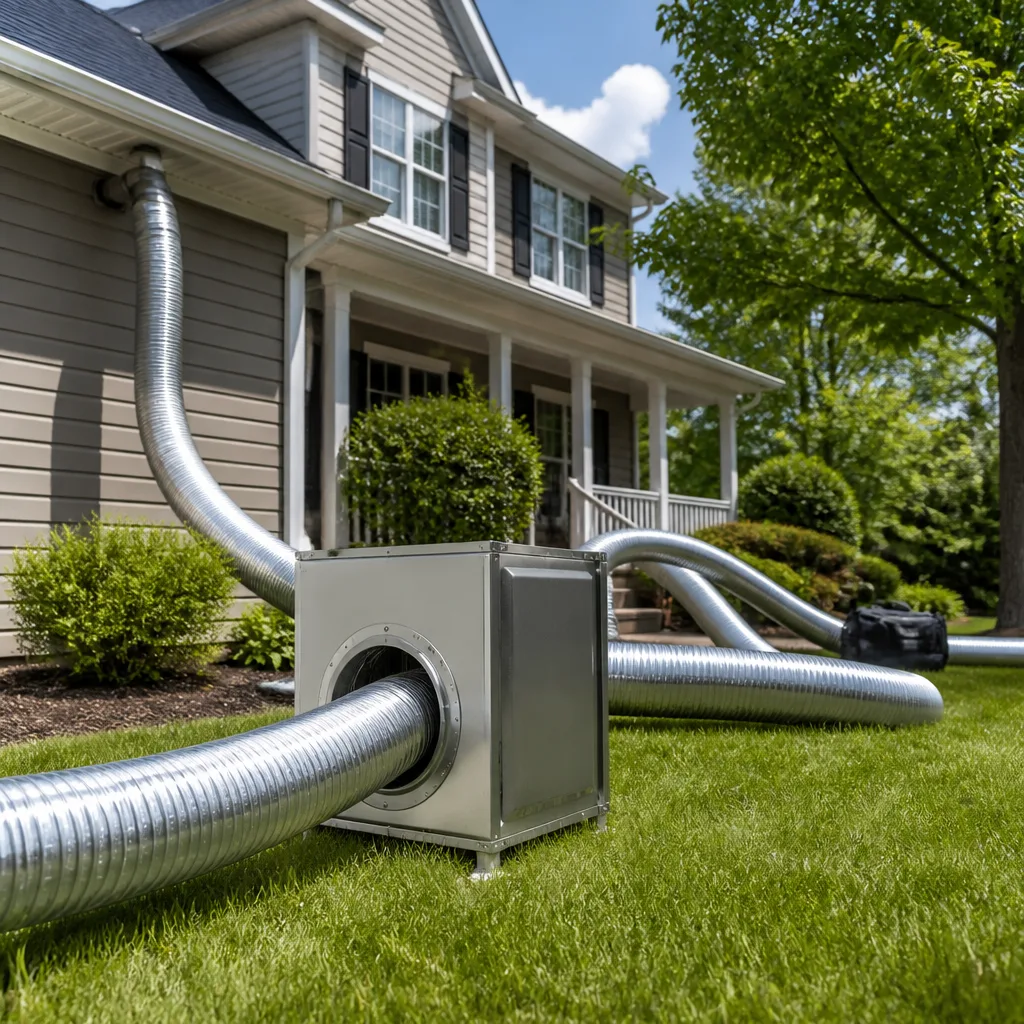 Whole-home duct cleaning
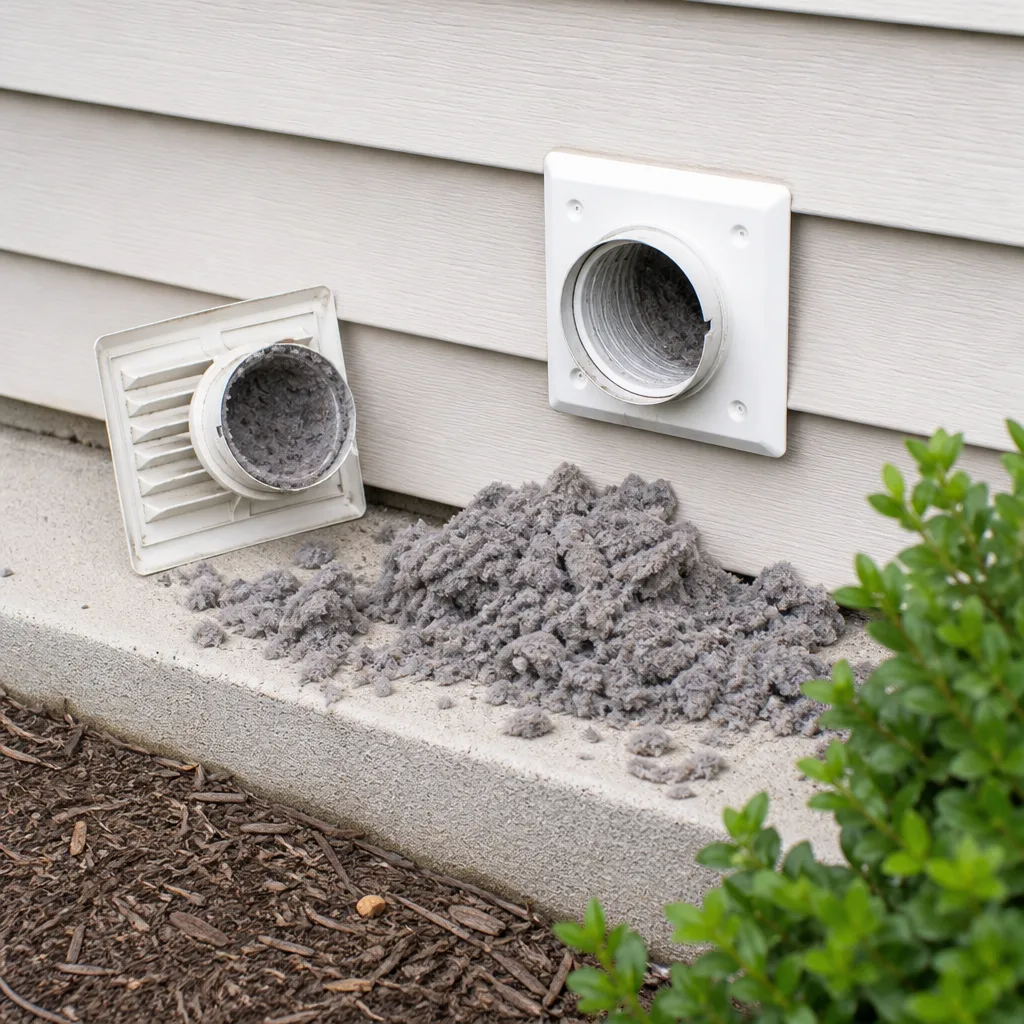 Dryer vent cleaning
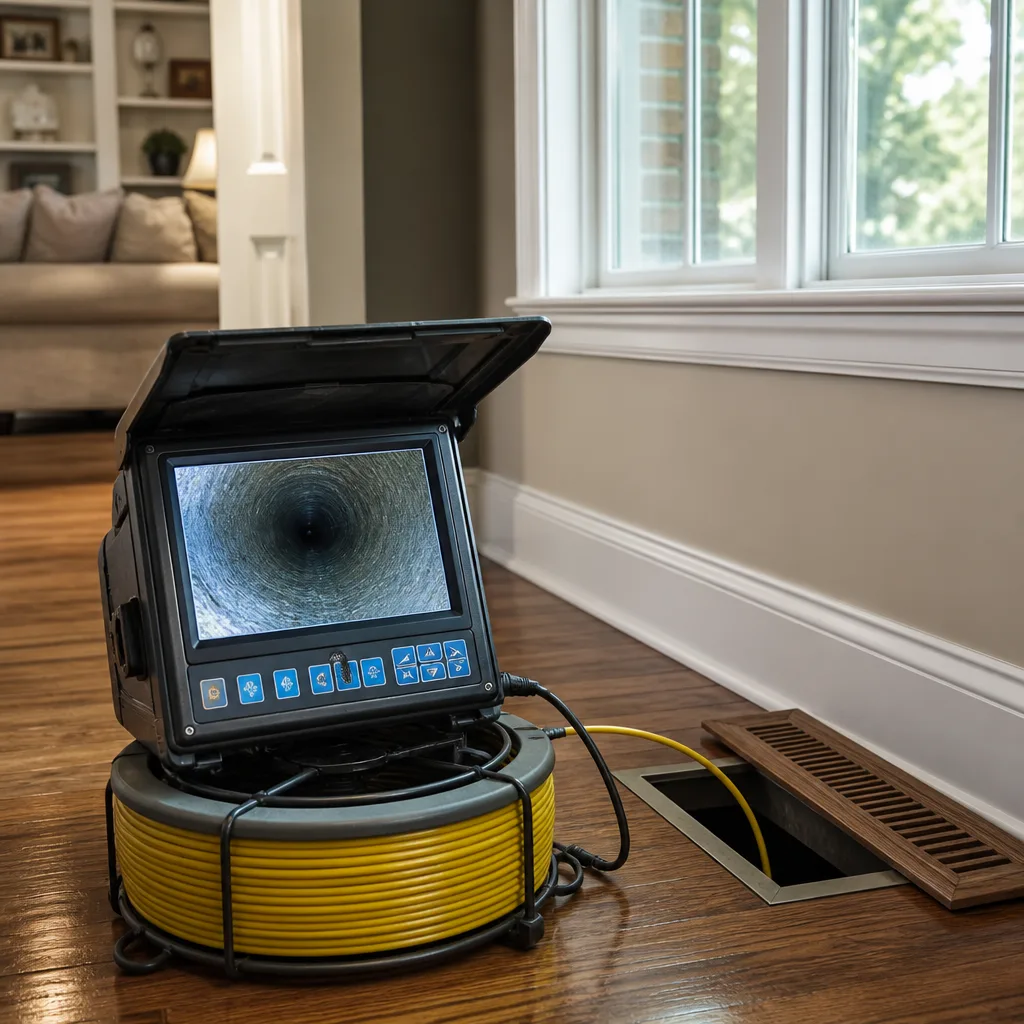 Camera inspection
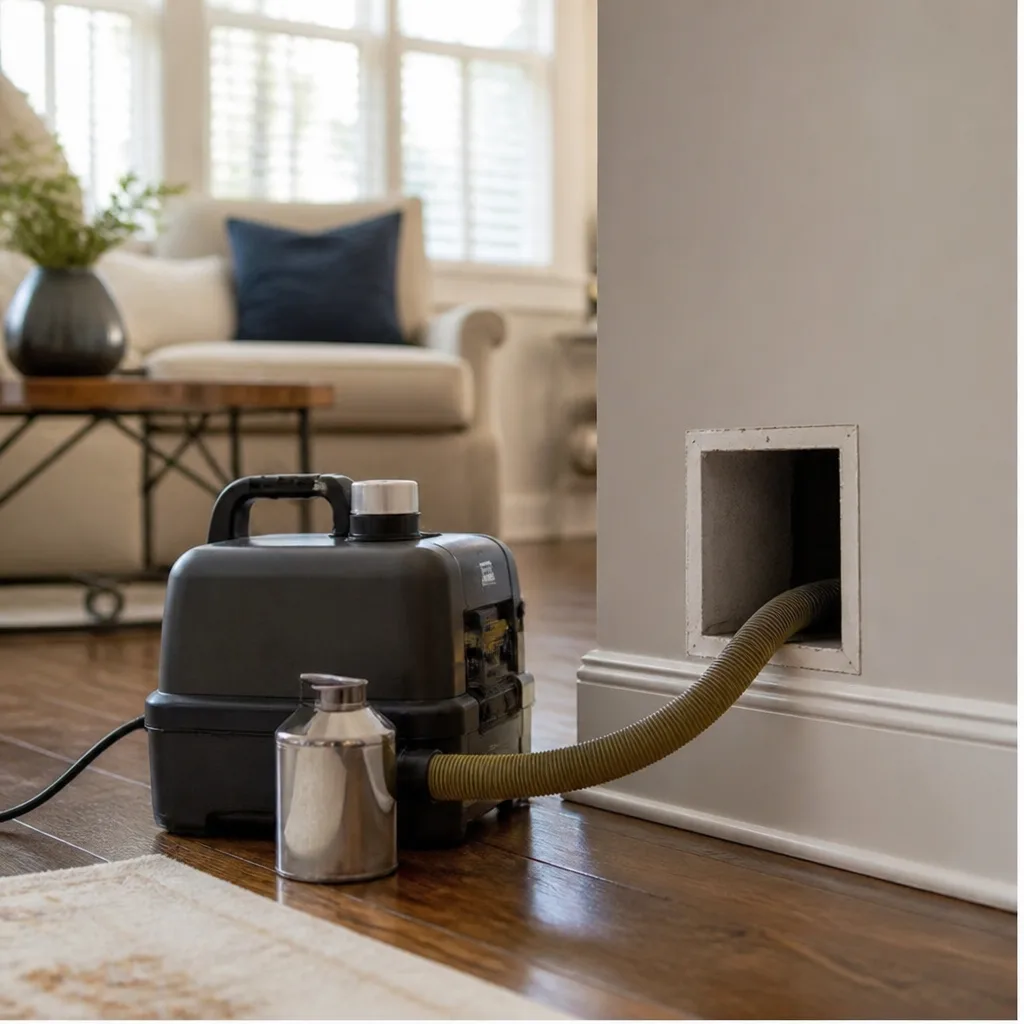 Sanitizing & deodorizing
Whole-system duct and dryer vent check with before-and-after photos - you see exactly what came out of your vents
That "$99 whole-house special" is a bait ad - the real number appears once they are in your hallway, or the "clean" is a shop-vac at the register. We photograph the inside of your ducts before and after instead.
The Complete Guide to Air Duct Cleaning in Hempstead
The EPA has never recommended a standard cleaning frequency for residential ducts. Yet half the flyers arriving in Hempstead mailboxes cite “every 3-5 years” as though it came from a federal code book. That number came from marketing departments, not from science, and it has driven honest homeowners into some of the worst bait-and-switch contracts in the home services trade. This guide explains what Air Duct Cleaning in Hempstead actually involves, what it should cost when priced honestly, and what a legitimate contractor is obligated to show you before any work begins. By the end, you’ll know more about how your ductwork should be cleaned than most of the crews quoting the job.
Styles & brands we work with
Quick Answer
Air duct cleaning in Hempstead typically costs between $350 and $650 for a full home when done by a contractor using NADCA-standard source-removal methods, and the job should take between 3 and 6 hours. A legitimate contractor writes the scope of work and a flat price before starting, then provides before-and-after photos of inside your ducts. Anything under $199 for a whole house is almost always a loss-leader trap designed to balloon once the technician is inside.
Table of Contents
- What Air Duct Cleaning Actually Is (and What It Isn’t)
- What the NADCA ACR Standard Actually Requires
- Hempstead-Specific Factors That Accelerate Duct Contamination
- Source-Removal vs. Contact-Vacuum: Why the Cheap Job Leaves Debris Behind
- What a Written Scope of Work Must Include
- Honest Duct Cleaning Pricing in Nassau County
- Common Mistakes to Avoid
- When to Call a Professional
- Frequently Asked Questions
- The Bottom Line
What Air Duct Cleaning Actually Is (and What It Isn’t)
Air duct cleaning is the physical removal of accumulated debris from the interior surfaces of your home’s supply and return ductwork. That debris is mostly household dust, but in Hempstead homes it often includes pet dander, cooking grease residue, fibers from carpeting and upholstery, and in oil-heated houses, a fine soot that works its way into the return side of the system. A proper cleaning also addresses the components that touch the air path: supply registers, return grilles, the blower motor and housing, the evaporator coil if you have central air, and the air handler cabinet itself.
What it isn’t is a filter replacement, a sanitizing fog, or a maintenance tune-up. Some contractors in Nassau County market “duct cleaning” deals that amount to little more than vacuuming the visible portions of your registers and spraying a deodorizer. That’s not cleaning. That’s a $99 appearance service, and the inside of your ductwork remains exactly as it was. At Hollis Air Duct Hempstead, we’ve pulled years of compacted dust and construction debris from ducts in homes where a previous “cleaning” had been done months earlier. The homeowner assumed the job was done because the technician showed them a clean register cover.
Before you schedule anyone, understand the distinction. A full system cleaning means opening access points into the trunk lines and branch runs, agitating debris loose, and pulling it out under negative pressure. If the contractor’s process doesn’t include accessing the main trunks, it’s not a professional air duct cleaning in Hempstead. It’s a surface wipe.
What the NADCA ACR Standard Actually Requires
The National Air Duct Cleaners Association is the trade body that writes the standard for residential HVAC system cleaning: the ACR, or Assessment, Cleaning, and Restoration standard. Most homeowners have never heard of it, but it’s the closest thing this industry has to a rulebook. A contractor who claims to follow “industry standards” should be able to say, in plain terms, what the ACR requires. Here is what that looks like on an actual job in Hempstead:
- The entire air path gets accessed and cleaned. The ACR requires cleaning of supply ducts, return ducts, grilles, registers, diffusers, the blower motor and housing, the air handler, drain pan, and the evaporator coil. Not just the ducts. Not just the registers.
- Debris is loosened and then removed under negative pressure. The standard calls for source removal: agitation to break debris free from duct walls, combined with a vacuum collection system that keeps that debris from re-entering the living space. A shop vac pushed up a vent doesn’t meet this.
- Access points are created according to the system’s layout. Contractors cut or uncover access panels at strategic points along the trunk lines to reach the full length of the duct runs. After cleaning, those access points are sealed properly.
- Fiberglass insulation that is wet or mold-contaminated is removed, not “cleaned.” The ACR is explicit: porous insulation that has been wet cannot be salvaged by brushing. It comes out and gets replaced.
- Components are visually inspected after cleaning. A conscientious contractor shows you what the inside of the ducts looked like before and after. This isn’t a luxury. It’s verification.
In our experience across Hempstead, maybe one contractor in five actually follows the full ACR. The rest clean a few feet in from each register, snap a photo of the shiny register cover, and call it done. Asking a contractor to walk you through the ACR checklist before quoting is one of the fastest ways to separate the real operation from the flyer crew.
Hempstead-Specific Factors That Accelerate Duct Contamination
Ductwork gets dirty everywhere, but Hempstead has a few characteristics that speed the process up. If you live in the older sections of town, near the Meadowbrook corridor, or in an oil-heated home, your ducts are working harder and accumulating material faster than the national average.
Oil heat and fine soot. Many Hempstead homes still run on oil. Oil burners produce a fine combustion residue that finds its way into the return side of forced-air systems, especially in older homes where the return duct pulls air from a basement or utility room adjacent to the burner. This soot is oily and sticky. It bonds to duct surfaces in a way ordinary household dust doesn’t, and it takes real mechanical agitation to break it loose. Homes that converted from oil to gas years ago still carry this residue in ducts that were never properly cleaned after the conversion.
Slab construction and long, low duct runs. A substantial portion of Hempstead’s housing stock was built on concrete slabs, with ductwork running through or beneath the slab. These systems pull air that naturally carries more moisture and particulates. When slab ducting develops small cracks or separated seams, the system draws in unfiltered air from crawlspace or soil areas, loading the ducts with material that would never enter a basement-mounted system in a newer home.
The Meadowbrook corridor effect. Homes within a mile or two of the Meadowbrook Parkway see measurably more fine road dust and brake-pad particulate suspended in the air. That air enters homes through windows, doors, and the fresh-air intake on your HVAC system. It settles in the ductwork. The closer you are to the corridor, the faster your ducts load up, especially in the return runs closest to the air handler.
Source-Removal vs. Contact-Vacuum: Why the Cheap Job Leaves Debris Behind
Here is the single most important distinction in this industry, and almost no flyer in Hempstead will explain it to you. There are two fundamentally different approaches to duct cleaning, and they produce fundamentally different results.
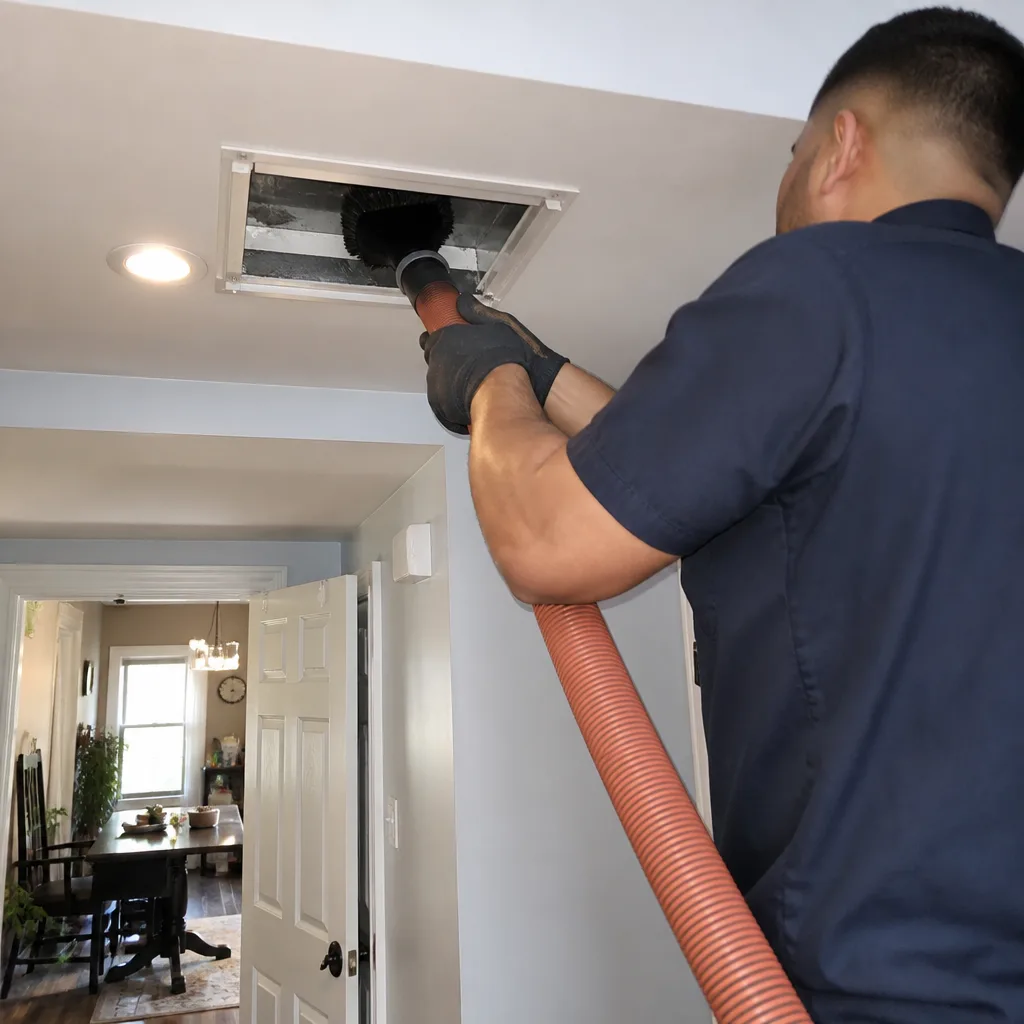
Source-removal cleaning is the method the NADCA ACR was written around. The contractor accesses the main trunk lines, mechanically agitates the debris using rotary brushes or compressed-air tools, and simultaneously pulls a continuous negative pressure through the system using a vacuum collector. The phrase “source removal” means the debris is removed from the source: the duct interior itself. When done correctly with professional-grade equipment like Nikro negative-air machines and Rotobrush rotary brush systems, source removal pulls out the years of compacted dust, fur, hair, and soot that line the duct walls. At the end of a proper source-removal job, the ductwork interior is visibly clean along its full length, not just near the registers.
Contact-vacuum cleaning is what the $99 and $129 specials actually do. The technician attaches a vacuum hose to a handheld tool, inserts it a few feet into each register opening, and sucks out whatever is loose within reach. The contact vacuum never reaches the main trunk lines, never agitates compacted material off the duct walls, and never touches the return side of the system beyond the grille itself. The technician may run the vacuum for five minutes per register and call it done. Visually, the register covers look better. Inside, the system remains as loaded as it was before, because the apparatus physically cannot reach the source of the contamination.
We’ve measured this difference in Hempstead homes. After a contact-vacuum job, our cameras routinely find 70 to 80 percent of the original debris still bonded to duct interiors. The homeowner paid for a service and got a demo. If a quote seems too low to be true, ask one question: “Does your process include accessing and cleaning the main trunk line?” If the answer is vague, you’re looking at a contact-vacuum crew. If you want this done once and done right, the duct sealing work we do in Hempstead follows a full source-removal cleaning, never a surface pass.
What a Written Scope of Work Must Include
Before any contractor in Hempstead touches your system, you should have a written scope of work in hand. Not a verbal estimate. Not a number scrawled on a business card. A document that states exactly what will be done, for what price, in what time frame. Here is what that document must contain:
- A list of every component included. Supply ducts, return ducts, supply registers, return grilles, blower motor, blower housing, air handler cabinet, evaporator coil (if applicable), drain pan. If the list says “ducts only,” ask what happens to the blower and coil, because those are the components that move the air you breathe.
- The cleaning method. The scope should say “source removal” and should name the equipment type. Negative-air machine. Rotary brush system. If the method isn’t named, you can’t verify it was followed.
- The number of access points and where they’ll be placed. Legitimate duct cleaning requires cutting or uncovering access panels. The scope should tell you how many and where, and should confirm they will be resealed properly.
- A flat price for the full scope. Not an hourly rate. Not a “starting at” figure. A specific dollar amount that covers everything listed. Any contractor who won’t commit to a fixed price before starting is reserving the right to charge more.
- The time window for arrival. The Garrison Standard, which our crews work under, requires arriving inside the quoted window. If a contractor won’t commit to a window in writing, expect a no-show.
- What happens after. The scope should state that before-and-after photos will be provided, that access panels will be sealed, and that the work area will be left clean.
Roy Castellanos, who runs Hollis Air Duct Hempstead, has a simple rule for scopes: if it can’t be written down before the work starts, it can’t be enforced after. Every job we quote in Hempstead gets a written scope with a fixed price. No exceptions, no “we’ll see once we’re inside.”
Honest Duct Cleaning Pricing in Nassau County
Let’s talk straight about what duct cleaning should cost in Hempstead and across Nassau County. The honest range for a full source-removal cleaning of a typical 3-to-4-bedroom home is $350 to $650. Here is how that breaks down:
- Under $199: Almost certainly a contact-vacuum job or a loss-leader trap. The technician arrives, “inspects,” and finds mold, excessive debris, or some other upsell that pushes the final invoice to $700 or more. Or they run a vacuum in and out of a few registers and leave you with clean-looking vent covers and the same dirty ducts.
- $200 to $349: Usually a partial cleaning. The contractor may clean supply ducts but skip the return side, the blower, the coil, or all three. This is the gray zone where “duct cleaning” gets redefined after you’ve already signed.
- $350 to $650: The legitimate range for a full-system source-removal cleaning in Nassau County. This covers access into trunk lines, mechanical agitation, negative-air collection, blower and coil cleaning where applicable, and time on site of 3 to 6 hours.
- Above $650: Reasonable only if the home is unusually large, has multiple systems, has ductwork that hasn’t been cleaned in 20-plus years, or includes duct sealing or coil repair work as part of the scope. The price should be itemized in writing.
One flat price per system, agreed before work starts, is how the honest operators in this market work. It removes the incentive to find problems that justify higher invoices. It also tells you something about the contractor: if they can’t price the job before touching it, they haven’t done enough of them to know what they cost. The dryer vent cleaning service we provide in Hempstead runs on the same rule: written price, fixed scope, no movement at the door.
Common Mistakes to Avoid
- Signing up for a “$99 whole-house special” before asking what “whole house” means. In most cases it means supply-side contact vacuuming only. The return side, blower, and coil are never touched, and the price on the invoice will not stay at $99.
- Paying for “sanitizing” or “deodorizing” sprays you didn’t ask for. These are high-margin add-ons with no lasting effect on duct interiors. If a contractor insists your ducts need chemical fogging, ask what specifically the chemical is addressing and request the SDS. A clean duct doesn’t need fragrance.
- Assuming a furnace tune-up includes duct cleaning. It doesn’t. A tune-up is mechanical maintenance on the furnace. Duct cleaning is a separate scope of work on the air delivery system.
- Not getting before-and-after photos. Any legitimate duct cleaning contractor in Hempstead has a camera system and can show you the inside of your ducts. If they can’t or won’t, you have no way to verify the work was done. Here at Hollis Air Duct Hempstead, we show every customer photos of their own ductwork before and after the job. It’s the only evidence that matters.
- Hiring the first flyer that arrives in the mailbox. Hempstead is saturated with duct cleaning flyers, and many come from the same handful of subcontracting networks. The flyer company often doesn’t employ the crew that shows up. Ask who actually performs the work, and whether the technicians are background-checked and uniformed.
- Treating duct cleaning as a maintenance item with a fixed schedule. Homes near the Meadowbrook corridor or with oil heat may genuinely need more frequent attention. Homes with excellent filtration and no pets may go a decade without meaningful buildup. A contractor who pushes “it’s been three years, you’re due” is selling on a calendar, not on the condition of your ducts.
When to Call a Professional
Duct cleaning is not a do-it-yourself job, as our DIY vs Professional Air Duct Cleaning: The Hempstead Homeowner’s Decision Guide explains in detail, and there are moments when a professional should be the call you make without hesitation. If you’ve just completed a renovation in an older Hempstead home, your ducts are likely holding drywall dust, sawdust, and debris from the work, and that material will circulate through the house for months unless it’s removed. If you have a household member with allergies or a respiratory condition that worsens inside the house, and the home has forced air, the ductwork is one place to look. If you can see dust accumulation on the inside of your register covers, or visible dust puffing from the registers when the blower starts, you’re past the point of routine maintenance. If the previous homeowner had pets, and you’re noticing dander buildup, a cleaning can remove years of fur and hair that the filter never caught. Hollis Air Duct Hempstead offers free estimates in Hempstead, with a written scope and a fixed price before any work begins. Call (516) 559-4917.
Frequently Asked Questions
A full source-removal duct cleaning in Hempstead costs between $350 and $650 for a typical 3-to-4-bedroom home, with larger homes or heavily contaminated systems running higher. See our How to Hire a Air Duct Cleaning Contractor in Hempstead: A Step-by-Step Guide for help choosing the right company. Anything below $199 is almost always a contact-vacuum job or a bait-and-switch lead generator. Call (516) 559-4917 for a written, fixed-price quote before any work starts.
There is no code-mandated frequency for residential duct cleaning, and the “every 3 to 5 years” figure has no basis in EPA guidance or building codes for Hempstead. The honest answer depends on your home: oil heat, proximity to the Meadowbrook corridor, pets, renovation history, and system type all affect buildup. If a contractor pushes a calendar-based deadline, ask what specifically in your ducts supports that timing.
The cheap quotes are cheap because the scope is smaller than the one you think you’re buying. A contact-vacuum job that touches the first few feet of each register takes an hour or two and costs the contractor very little. A source-removal cleaning requires professional equipment, access into trunk lines, and several hours on site. You aren’t paying for the same service at a lower price; you’re paying for a different, partial service.
You should receive before-and-after photos taken from inside your ductwork, showing the same locations before and after the cleaning. If a contractor cannot provide these, you have no way to verify the job. At Hollis Air Duct Hempstead, every customer receives photographic verification of their own ductwork before and after the cleaning, plus a written report of what was done.
Yes, in several ways. Hempstead’s older housing stock includes many slab-construction homes with ductwork that pulls in ground-level particulate, many oil-heated homes that leave fine soot deposits in return ducts, and proximity to the Meadowbrook Parkway that increases fine road dust. A contractor who knows Hempstead understands these factors and can identify contamination sources specific to your block and system type.
Ask for photographic evidence and a description of what is actually growing, then get a second opinion before authorizing any “mold remediation” upsell. Legitimate contractors identify materials that are wet, show you the evidence, and remove the contaminated material rather than fogging it with chemical sprays. No honest contractor will use a mold claim as a lever to double the invoice on the spot.
The Bottom Line
The difference between a good duct cleaning in Hempstead and a bad one isn’t the price on the flyer. It’s the method, the scope, and the verification. Source-removal cleaning done to the NADCA ACR standard, priced honestly, runs $350 to $650 for most Nassau County homes. Anything cheaper is cheaper for a reason: less equipment, less access, and less of your ductwork actually touched. The contractor you can trust is the one who writes down what they’ll do, charges a fixed price for it, shows you the inside of your ducts before and after, and stands behind the work in writing. That’s the standard, and it exists in Hempstead. For more guides & resources, visit our blog.
Written by Roy Castellanos, Owner at Hollis Air Duct Hempstead, serving Hempstead since 2004.
See the difference
 Before
 After
After Before
 After
After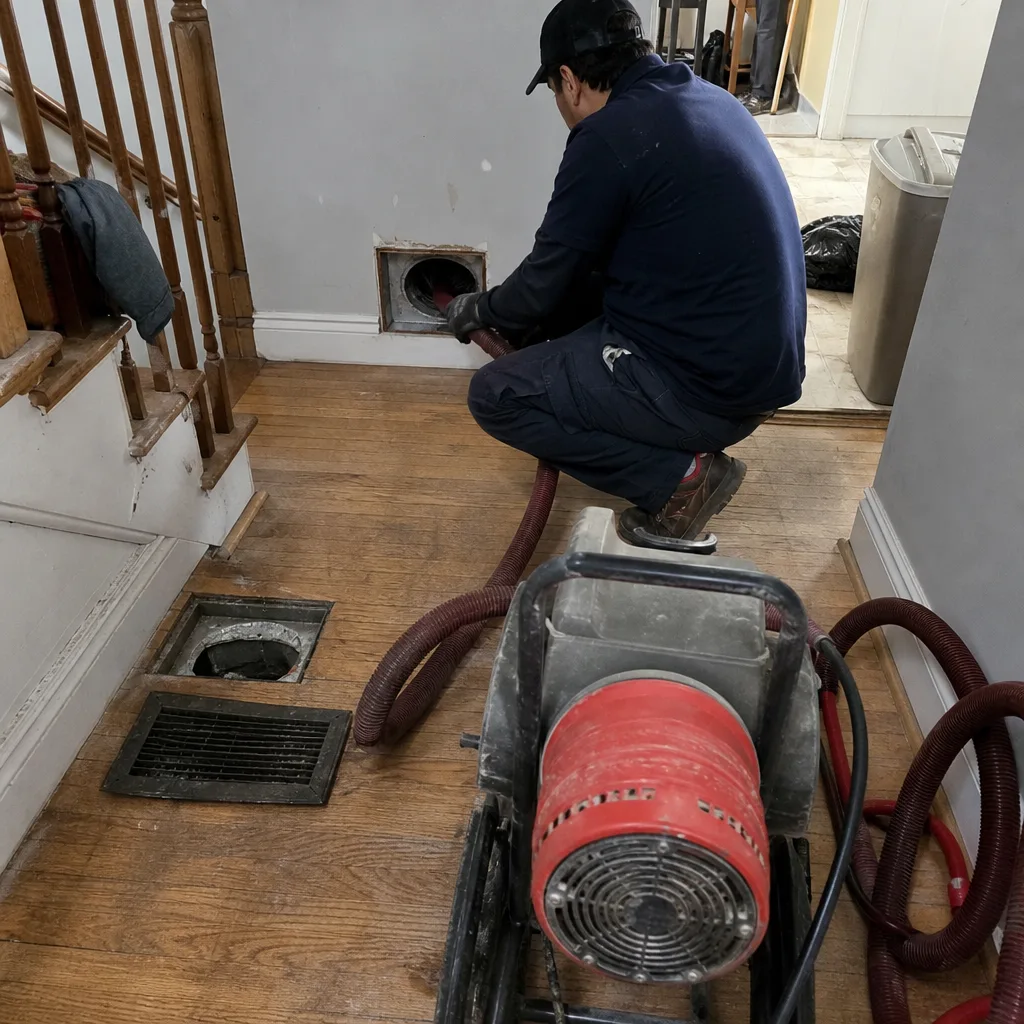 Before
 After
After