
Last updated October 15, 2026
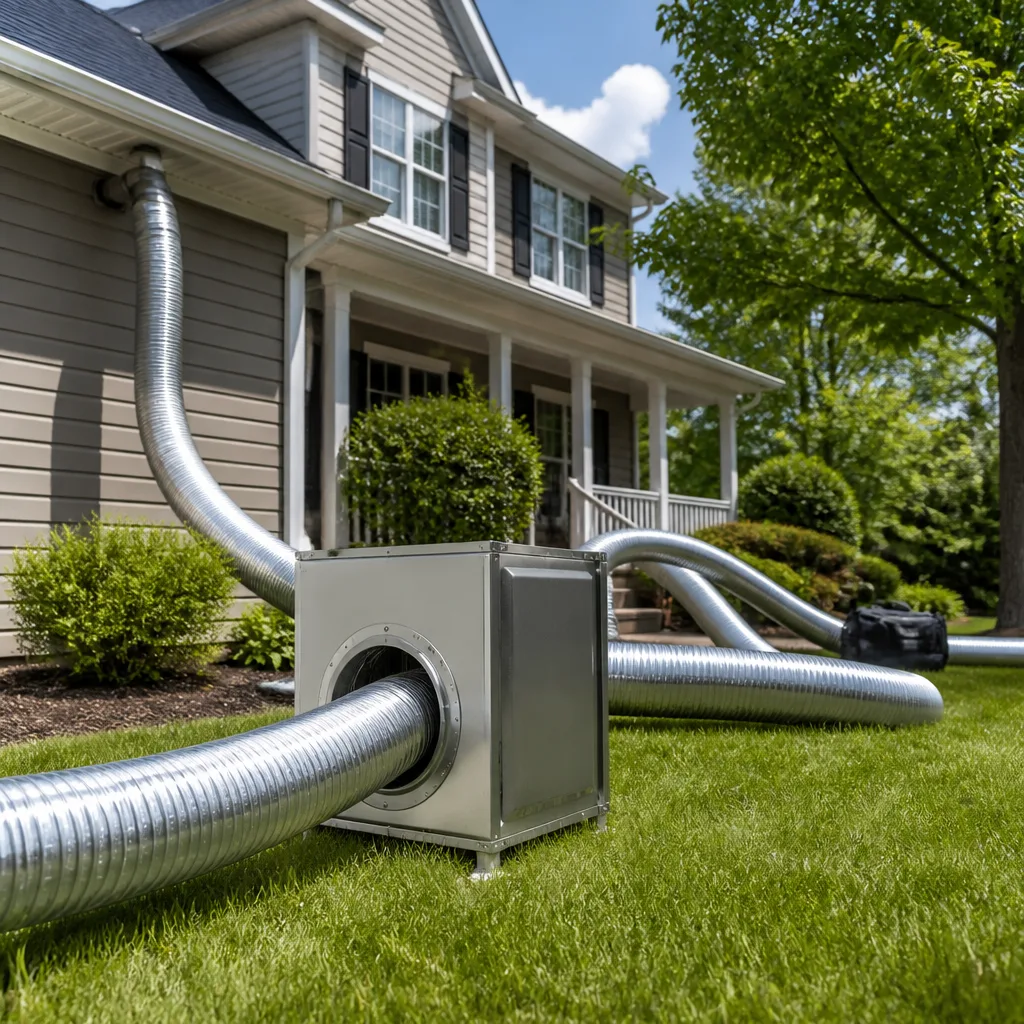 Whole-home duct cleaning
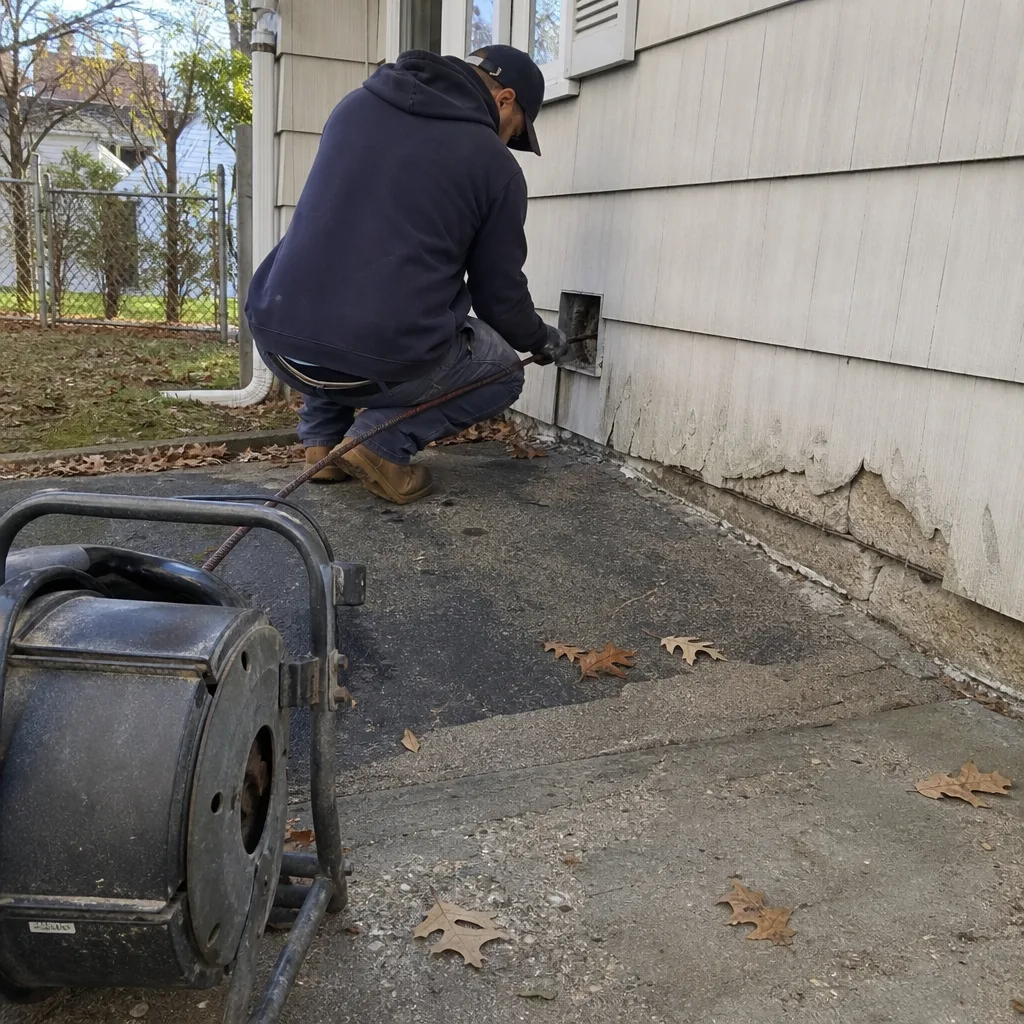
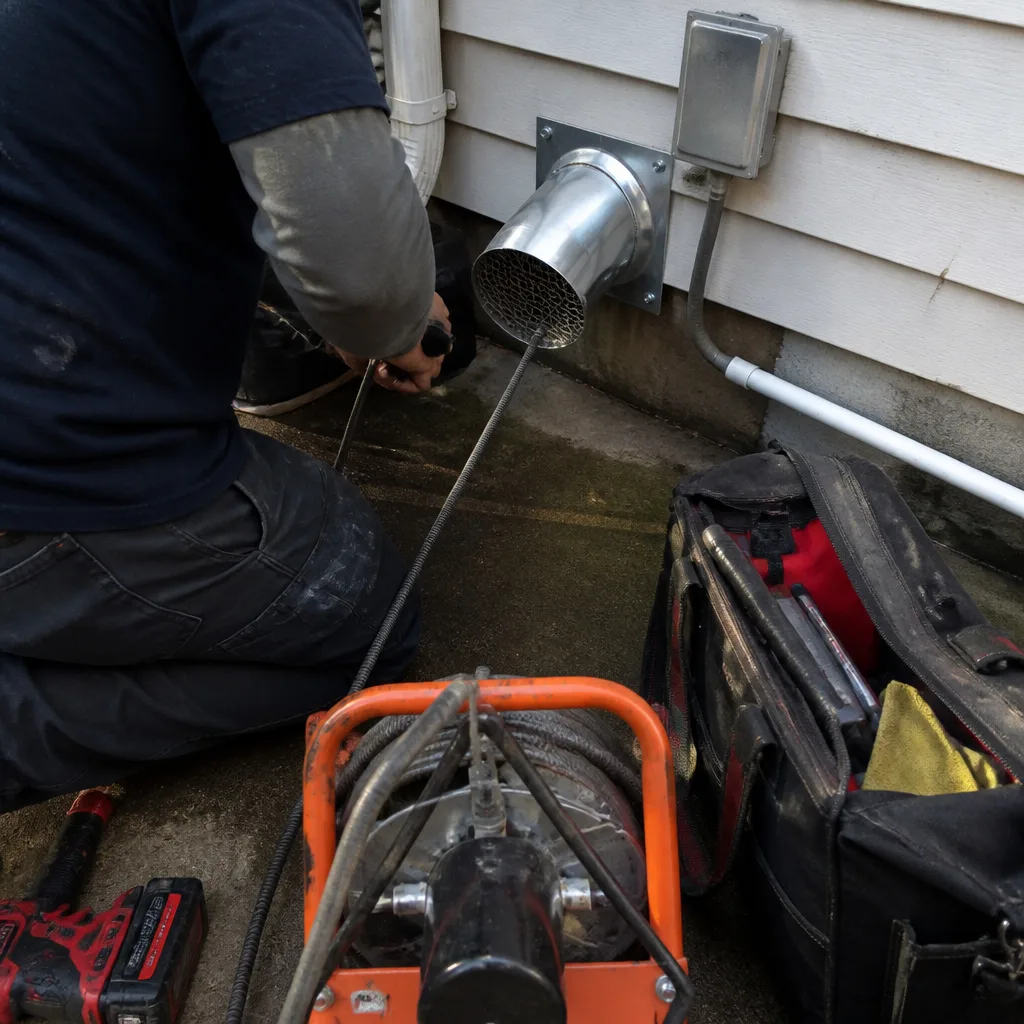
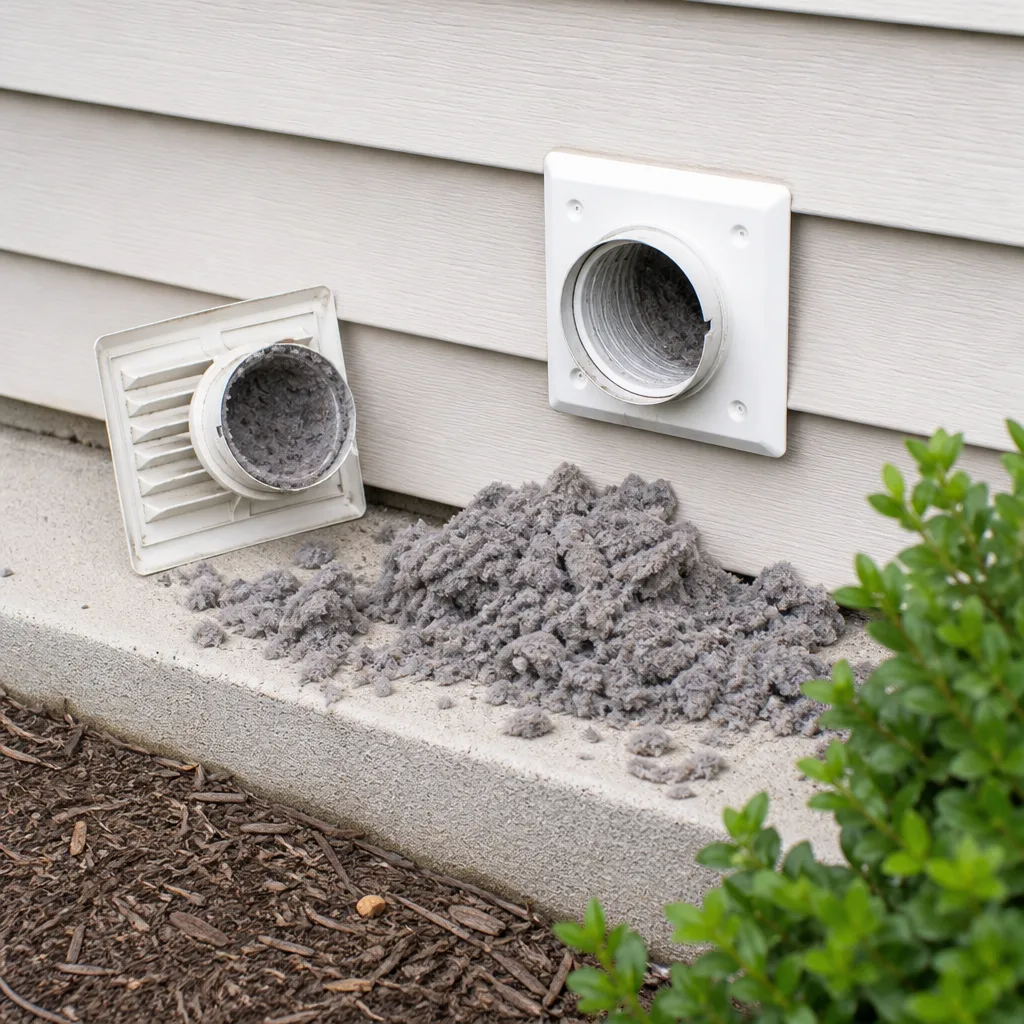 Dryer vent cleaning
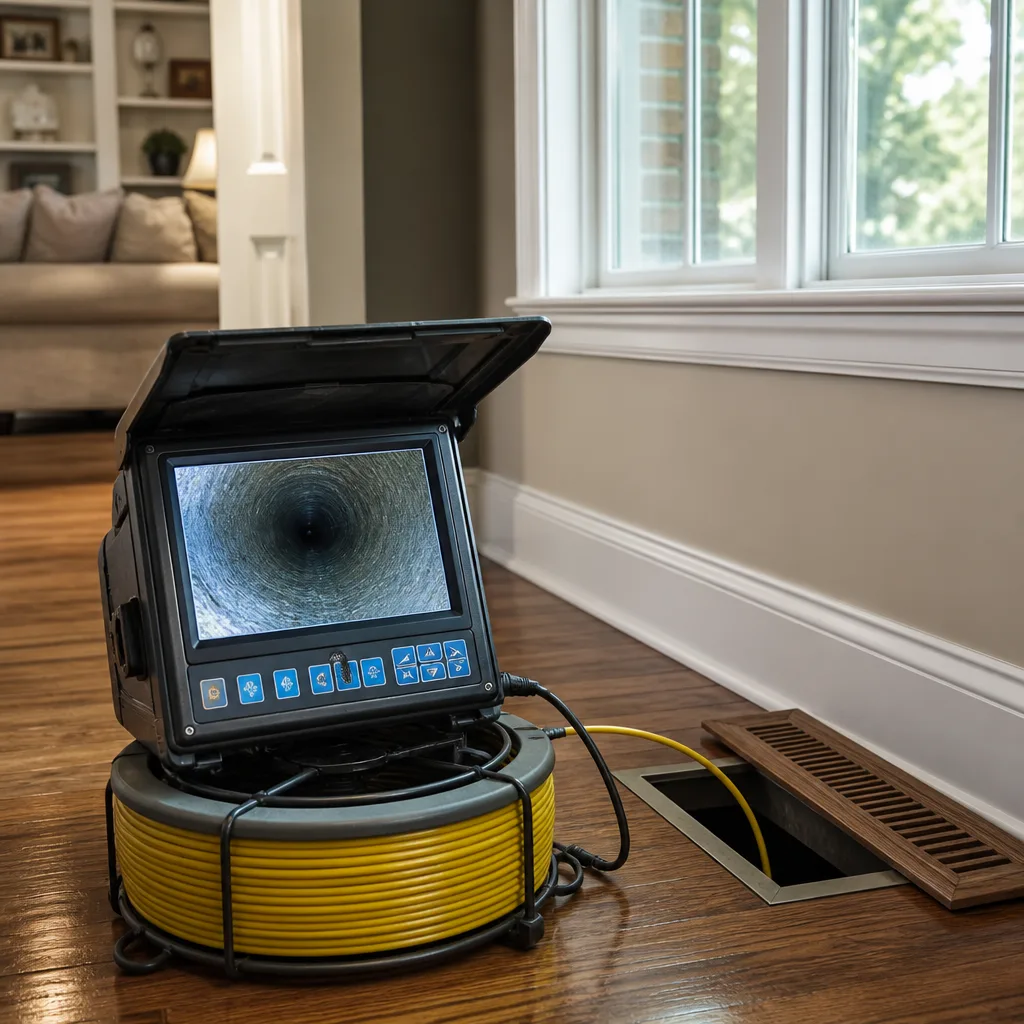 Camera inspection
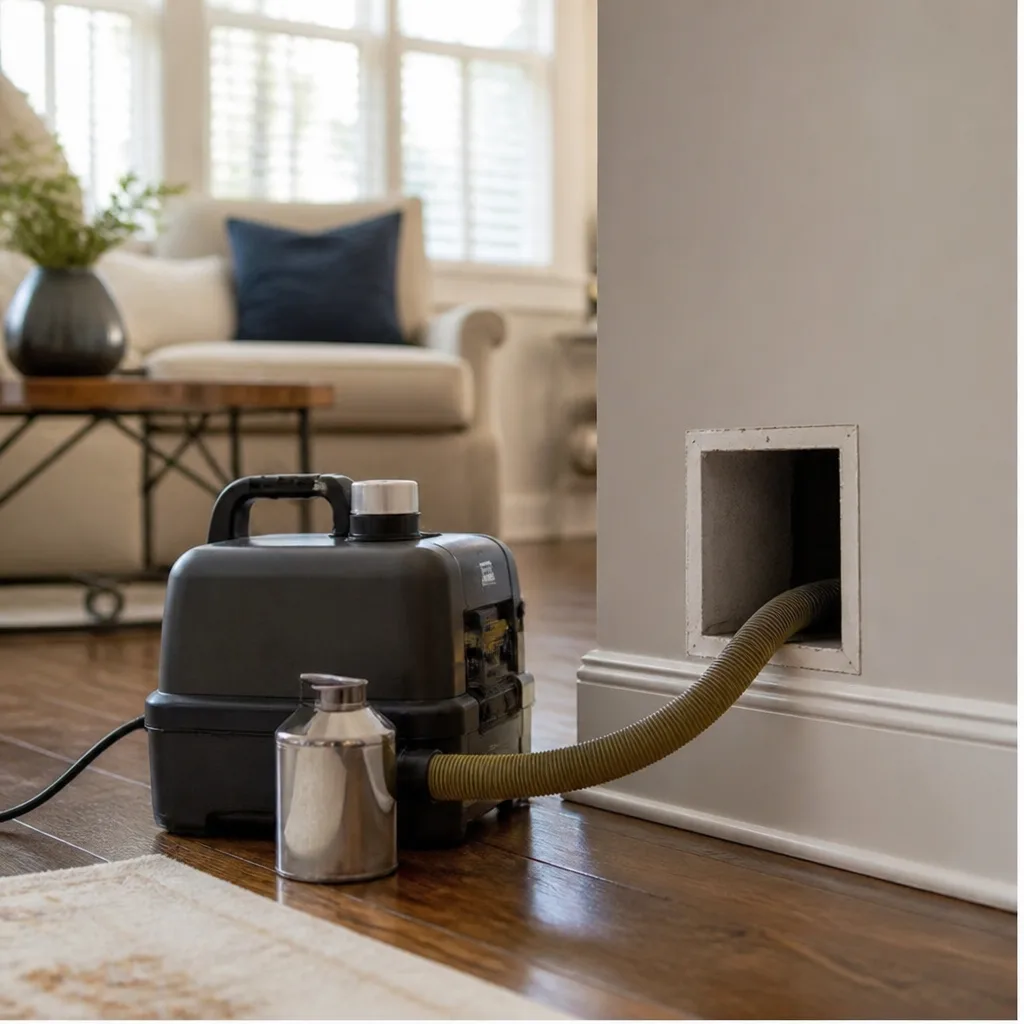 Sanitizing & deodorizing
Whole-system duct and dryer vent check with before-and-after photos - you see exactly what came out of your vents
That "$99 whole-house special" is a bait ad - the real number appears once they are in your hallway, or the "clean" is a shop-vac at the register. We photograph the inside of your ducts before and after instead.
Air Duct Cleaning Warning Signs: A Hempstead Homeowner’s Reference Guide
Most Hempstead homeowners replace a furnace filter on schedule and assume the air moving through the house is clean. Here’s the reality: the ductwork behind your walls can carry years of accumulated debris that a fresh filter never touches. In our experience across Nassau County, a sudden January spike in a heating bill has more to do with the ducts than the furnace. Restricted airflow from debris accumulation can cut system efficiency by 20% before any component actually fails. This guide walks through the specific warning signs that indicate your ducts need attention in Hempstead, and which ones mean you should call a professional. For a deeper dive, see The Complete Guide to Air Duct Cleaning in Hempstead.
Styles & brands we work with
Quick Answer
The clearest warning signs that your Hempstead home’s air ducts need cleaning are uneven airflow between rooms, visible gray-black dust rings around return-air grilles, allergy symptoms that fade when you leave the house and return within 30 minutes of coming back, and any recent renovation work done while the HVAC was running. A musty odor when the system starts also points to duct contamination. If you’re seeing two or more of these signs, the ducts are the likely cause, not the furnace or AC unit itself.
Table of Contents
- The Airflow Asymmetry Test: Finding the Rooms Your Ducts Have Already Choked
- The Return-Air Grille: What Surface Dust Means and What the Gray-Black Ring Means
- Health-Pattern Warning Signs: Symptoms That Track With Being Home
- Post-Renovation: A Hard Trigger, Not a Soft Suggestion
- The Smell Timeline: What Musty, Burning, and Chemical Odors Tell You
- How Duct Cleaning Actually Works in a Hempstead Home
- Common Mistakes to Avoid
- When to Call a Professional
- Frequently Asked Questions
- The Bottom Line
The Airflow Asymmetry Test: Finding the Rooms Your Ducts Have Already Choked
Duct restrictions rarely announce themselves evenly. Debris builds up in specific branch runs while others stay relatively clear, and the result is a house where the living room feels comfortable but the back bedroom never quite reaches temperature, no matter how long the system runs. Hempstead homes built before the 1980s are especially prone to this because many still run original sheet-metal ductwork with joints that have pulled apart over decades of freeze-thaw cycles.
You can identify which rooms are already restricted without any tools. Here’s the test we teach every Hempstead homeowner before they decide whether to call us:
- Set the thermostat to fan-only mode. This runs the blower without heating or cooling, so what you’re measuring is raw airflow, not temperature effects.
- Hold a single-ply tissue or a lit incense stick about 2 inches from each supply register. Start with the register closest to the air handler, then work your way to the farthest room.
- Compare the deflection between rooms. A tissue that hangs limp in the back bedroom while fluttering strongly at the living room register is the classic signature of a restricted branch run. Incense smoke that drifts lazily upward instead of being pulled toward the grille tells the same story.
- Walk the return side too. With the blower running, place the tissue against the return-air grille. It should hold firmly against the grille from suction. If it barely sticks, the return path is choking.
What this test reveals is debris accumulation inside the ducts themselves, not a failing blower motor. We’ve walked into Hempstead homes where the homeowner had already spent $400 on a new blower, only to find the real problem was a 12-foot run of duct packed with pet hair and drywall dust from a bathroom remodel done five years earlier. That’s a $400 part masking a problem that needed a professional air duct cleaning in Hempstead, not a mechanical repair.
One more asymmetry signal: listen at the register. A restricted run often produces a faint whistle or a change in pitch when the blower ramps up. That sound is air squeezing past a partial blockage, and it’s one of the earliest audible clues you’ll get.
The Return-Air Grille: What Surface Dust Means and What the Gray-Black Ring Means
Surface dust on a return-air grille is normal. Every home in Hempstead accumulates dust on the grille vanes because that’s where all the house air gets pulled before it’s filtered. You wipe it off every few weeks, and it comes back. That is not a warning sign.
What is a warning sign is a gray-black ring that forms around the grille frame, beyond the reach of the filter. That ring tells you unfiltered air has been bypassing the filter and pulling contamination directly into the duct system. The ring is made of fine particulate: dust, cooking residue, candle soot, and skin cells that should have been caught by the filter but instead slipped around its edges.
Here’s the distinction we want every Hempstead homeowner to understand:
- Surface dust on the grille vanes: Normal. Clean it and move on.
- Gray dust accumulating on the wall or ceiling around the grille: The filter isn’t seating properly, or the filter frame is warped. Air is bypassing the filter media entirely.
- Black, greasy ring around the grille frame: This is long-term bypass contamination. The sooty residue has been depositing for months or years. Where you see this ring on the return side, you almost always find matching buildup inside the return duct and on the blower wheel.
In Hempstead’s older housing stock, we see this pattern most often in homes with original filter slots that were sized for 1-inch fiberglass filters. The slot has loosened over 40 or 50 years of filter changes, and the filter no longer seals against the frame. Every time the blower runs, a fraction of the air sneaks around the filter and drags unfiltered dust straight into the coil. That bypass air is why the return looks dirty even a week after the filter was replaced.
Health-Pattern Warning Signs: Symptoms That Track With Being Home
This is the section competitors in the duct cleaning trade rarely write about, and it’s the one that matters most to the people living in the house. The pattern to look for is not a constant cough or constant headache. It’s a symptom that maps to the building’s occupancy, not to a calendar.
Here’s the specific pattern: you feel fine at work, fine outside, fine everywhere except the house. You leave for a weekend trip and the congestion clears by Saturday afternoon. You get home Sunday evening, and within 30 minutes of walking through the door, the sneezing or the dry throat or the headache returns. That timing is the signal. Allergens and irritants that circulate through ductwork concentrate in the indoor air, and your body reacts to that specific soup of particulate, not to the outdoors.
The most common health-pattern signs we hear from Hempstead homeowners, in order of frequency:
- Morning congestion that fades after leaving the house: Bedroom ducts have been circulating dust and dust-mite particulate all night while you slept 10 inches from the register.
- Headaches on furnace-only days: Heated air picks up debris that settled in the ducts during the cooling season and carries it throughout the house. This is why the first few cold weeks of fall in Hempstead often trigger symptoms that didn’t exist in August.
- One family member reacting in one room: A child with a dust sensitivity who only sneezes in the playroom, or a spouse who only coughs in the den, is pointing at specific duct branches, not a general house-wide problem.
- Scratchy throat when the heat first cycles on: The blast of air that hits you when the blower starts is moving particulate that settled while the system was idle.
None of these are medical diagnoses, and we’re not doctors. But when the pattern tracks with the building and not with seasons or events, the duct system is the most likely reservoir for whatever is triggering the reaction. A Hollis Air Duct Hempstead home inspection starts with the air you’re actually breathing, not a sales pitch.
Post-Renovation: A Hard Trigger, Not a Soft Suggestion
If you finished any renovation in a Hempstead home while the HVAC system was running, debris is already in the ductwork. This is not a maybe. It is a physical certainty. Drywall sanding alone produces particles fine enough to stay airborne for hours, and if your return-air grille was anywhere in the same airspace as the work, the blower pulled those particles into the system with every cycle.
Specific renovation events that demand duct inspection afterward:
- Drywall repair or replacement: Gypsum dust is ultra-fine and gets deep into branch runs. It coats the inside of the ducts and then releases slowly over months of normal operation.
- Insulation removal or installation: Fiberglass particulate from old batt insulation, or blown-in material from an attic job, often ends up in return ducts because the return pulls air from the same space being worked in.
- Floor sanding and refinishing: Hempstead has thousands of older homes with original hardwood, and refinishing those floors produces fine wood dust that drifts into every room on the same level.
- Kitchen or bath remodeling: Demolition dust, tile-cutting dust, and old plaster all become airborne. If the HVAC was running to keep the crew comfortable, it was circulating.
Here’s the guidance we give without exception: after any project that produced visible dust, the ducts need cleaning before the next heating or cooling season. The 20% efficiency loss we mentioned earlier compounds in a post-renovation scenario because gypsum and plaster dust are heavy and settle into the lower third of horizontal runs, where they form a permanent restriction unless actively removed through our Air Duct Cleaning services. Waiting a year doesn’t make the problem go away. It bakes the debris into the system and makes removal harder.
For Hempstead homeowners who just finished a renovation, we typically recommend scheduling the duct inspection as the final trade on the project. It’s the same logic as having the site cleaned before you move furniture back in. The only difference is this cleanup happens inside the walls.
The Smell Timeline: What Musty, Burning, and Chemical Odors Tell You
Smells are the most informative warning sign your ducts can give you, because each odor points to a different type of contamination, and each demands a different response. Here is what each one means in a Hempstead home, ranked from most common to most serious.
Musty or mildew smell when the system first starts
This is the most common duct odor we encounter. It means moisture has been present somewhere in the system for long enough to support microbial growth. In Hempstead’s humid summers, the evaporator coil and its surrounding duct plenum are the usual source. Condensation that doesn’t fully drain sits in the coil pan, and when the blower runs, the smell of that stagnant water-and-dust slurry gets pushed through the house. This is a cleaning problem, not a structural one. A proper air duct cleaning in Hempstead addresses the coil, the pan, and the duct surfaces where the odor has embedded.
Burning or electrical smell only when the heat runs
If the smell appears only in heating mode, the likely source is dust that settled on the heat exchanger or on the electric heating elements during the months the system sat idle. The first few heat cycles of autumn burn off that accumulation, and the smell usually fades within a day or two. If it persists, or if it smells like plastic or rubber rather than dust, stop running the system and call an HVAC technician. That’s beyond what duct cleaning addresses, and continuing to run a burning-smell system is a genuine fire risk. In our experience, the persistent burning smell is rare, but when it shows up, we refer the homeowner to an HVAC contractor before we’ll touch the ducts.
Chemical, solvent, or fuel smell
This one requires immediate attention and is not a cleaning job. A chemical odor in the ducts can mean anything from a household chemical spill near a return grille to backdrafting from a combustion appliance. If you smell anything resembling natural gas, paint thinner, fuel oil, or solvent coming through the registers, open windows, turn off the system, and call the gas utility or your HVAC contractor immediately. A cleaning crew should not be the first call on a chemical smell. In Hempstead, where many homes use natural gas or fuel oil for heat, a persistent chemical smell is a safety issue until a professional has ruled out a leak or backdraft condition.
How Duct Cleaning Actually Works in a Hempstead Home
Understanding what a proper duct cleaning involves helps you evaluate whether a company is offering the real service or a surface-level vacuum job. If you’re weighing options, read our comparison of DIY vs Professional Air Duct Cleaning: The Hempstead Homeowner’s Decision Guide. The trade has two legitimate methods, and most quality companies in Hempstead use both in combination.
The negative-air method connects a large vacuum system to the ductwork, usually at the air handler or at a main trunk line, to create continuous suction throughout the system. HEPA-filtered negative-air machines, like the Nikro units we run on Hempstead jobs, pull the dislodged debris out of the ducts while trapping the fine particulate in filters rather than exhausting it into your house. The negative-air method is the industry standard for whole-system cleaning.
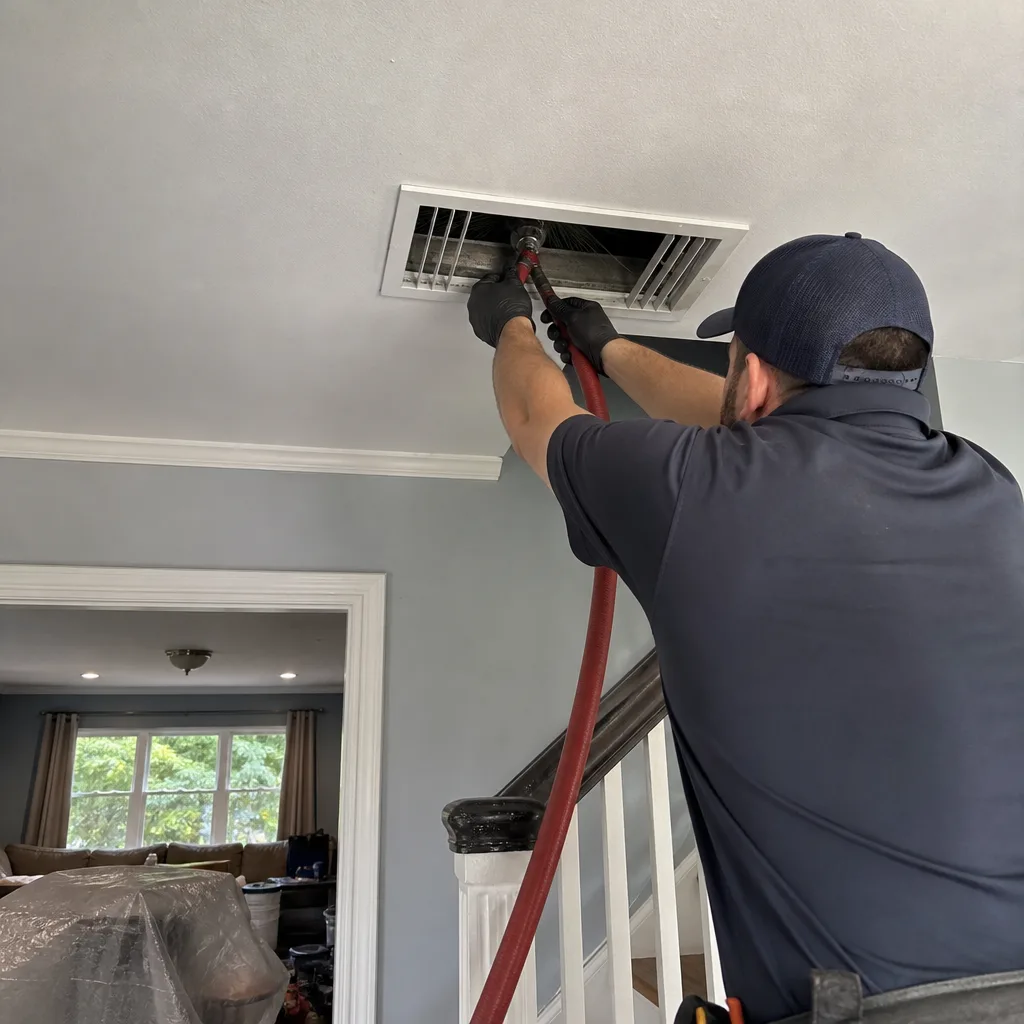
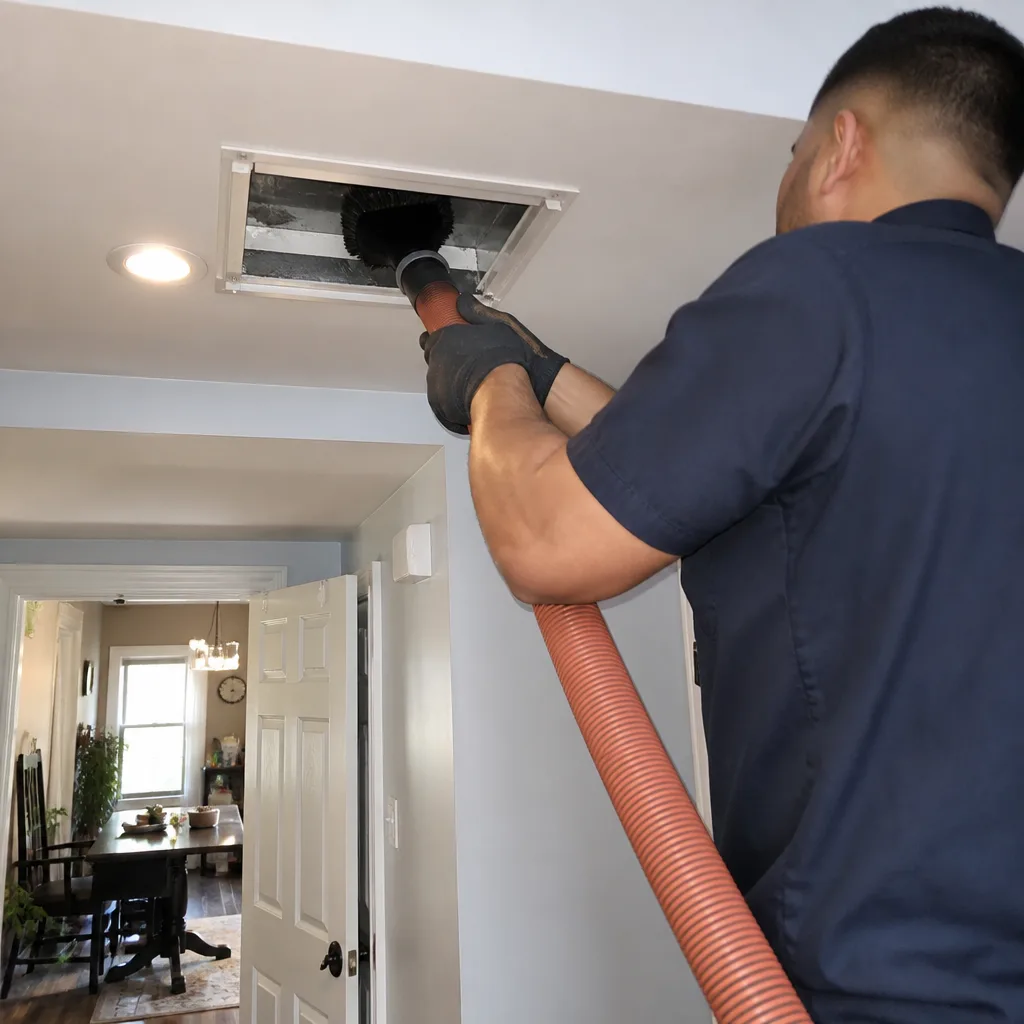
The rotary brush method feeds a spinning brush through each branch run to physically knock debris off the duct walls. Professional-grade systems like the Rotobrush equipment we use in Hempstead homes combine the rotary agitation with onboard vacuum collection in the same pass. The brush loosens what air alone can’t move, and the vacuum captures it before it can re-settle downstream.
Here’s the sequence of a complete cleaning:
- Seal all supply registers except the one being cleaned. This creates focused suction through each branch run, one at a time.
- Cut a service access in the plenum or trunk line if one doesn’t already exist, and connect the negative-air vacuum there.
- Agitate each branch run with the rotary brush, starting at the register and working back toward the trunk line.
- Clean the return side separately, since return ducts are often dirtier than supply ducts. Supply air has passed through the filter; return air has not.
- Clean the blower compartment, fan blades, and evaporator coil if accessible. Debris here reduces airflow even after the ducts are clean.
- Reseal the access points with proper duct-sealing mastic, not tape, so the system holds pressure.
In Hempstead homes with fiberglass duct board rather than sheet metal, the process is slightly different. Fiberglass surfaces can’t withstand aggressive rotary brushing, so we use compressed-air agitation and soft brushing instead. Hempstead’s housing stock spans both duct types depending on the era of construction, and the method has to match the material.
Common Mistakes to Avoid
- Assuming a clean supply register means clean ducts. The register is the last six inches of the run. You can wipe it spotless every week while the 20 feet of duct behind it stays packed with debris. Look at airflow, not shine.
- Replacing the furnace filter and calling it good. The filter only protects the equipment and cleans air on the return side. Supply ducts downstream of the filter collect whatever made it through or around the filter. In older Hempstead homes with loose filter slots, that’s a meaningful amount.
- Waiting until the smell is undeniable. By the time a musty smell is strong enough to notice from the couch, the contamination has been building for months. The price to fix it doesn’t drop by waiting, but the duct lining damage from prolonged moisture exposure can push the job from cleaning into duct sealing in Hempstead territory.
- Hiring on the lowest quoted price. The bait-and-switch play in this trade is a low teaser price that balloons once the tech is inside and “discovers” the job is bigger than quoted. Real duct cleaning in Nassau County for a typical single-family home runs $450 – $750, and anyone quoting $89 is selling a foot in the door, not a clean system.
- Skipping the dryer vent while you’re at it. Lint-clogged dryer vents are a fire hazard, and they share a wall with your duct system in many Hempstead homes. If you’re having the ducts done because of airflow and dust problems, a dryer vent cleaning in Hempstead at the same time costs less than scheduling it separately and eliminates a related risk.
- Believing that duct cleaning is a once-in-a-lifetime job. The truth is the system re-accumulates debris over time. Hempstead homes with shedding pets or recent renovations may need the service every three to five years. Homes without those factors can go seven to ten. What matters is the condition of the system, not a fixed interval.
When to Call a Professional
Call a duct cleaning professional when you see the airflow asymmetry we described in the first section, when the gray-black ring around the return grille doesn’t wipe away with a rag, when symptoms track with being inside the house, or when a renovation just finished in a Hempstead home that had the HVAC running during the work. These are all concrete, observable signals, not hunches. If you’ve been through two filters in two months and the dust keeps reappearing on furniture within days of wiping, the reservoir is in the ducts.
Hollis Air Duct Hempstead offers free estimates for Hempstead homeowners. Call (516) 559-4917 and we’ll walk through what you’re seeing, give you a written price before any work starts, and tell you honestly if the problem is ducts or something else.
Frequently Asked Questions
For a typical single-family home in Hempstead with 8 to 15 registers, a complete air duct cleaning runs between $450 and $750, depending on the condition of the system, the number of branch runs, and whether the coil and blower compartment are included in the scope. Every Hollis job receives a written price before any work starts, and that price does not move at the door. Call (516) 559-4917 for an exact quote on your Hempstead home.
Run the airflow asymmetry test with a tissue at each register with the fan on. If some rooms show strong airflow and others barely move a tissue, if your return-air grille has a gray-black ring around the frame, or if your allergies ease up when you leave the house and return within 30 minutes of coming back, your ducts are the likely culprit. Two or more of these signals together is a strong case for a professional inspection.
Cheaper quotes in Hempstead usually come from outfits that plan to upsell once they’re inside, or that don’t actually clean the full system. The standard bait is a low per-room price that implies a total far below market, then the technician “finds” mold, damage, or extra vents and the price climbs. The trade’s honest whole-system range for Hempstead is $450 – $750. Quotes far below that are selling a reason to knock on your door, not a clean duct system.
Ask for before-and-after photos of the inside of your ducts. Any legitimate company has the inspection camera equipment to show you the main trunk and several branch runs before cleaning and after. At Hollis Air Duct Hempstead, we show you the before-and-after images on site before you sign off. A company that won’t or can’t show you the inside of your own ducts did not earn your payment.
Most Hempstead homes need a professional duct cleaning every three to five years when pets are present or after any renovation. Homes with no pets, minimal dust sources, and recently upgraded filtration can go seven to ten years between cleanings. The schedule should follow the condition of the system, not a company’s marketing calendar. If your last cleaning was more than five years ago and you’re seeing the warning signs in this guide, it’s time.
Yes. When debris restricts airflow through the ducts, the blower works harder to move the same volume of air, and the heat exchanger transfers less heat into the house. The Department of Energy has published data showing that duct leakage and restrictions can account for 20% to 30% of the energy a system consumes. A restricted duct run in a Hempstead winter directly inflates your heating bill, which is why January bill spikes are often a duct problem, not a furnace problem.
The Bottom Line
Duct warning signs show up as airflow changes, grille discoloration, health patterns tied to the house, post-renovation dust, and specific smells. None of these are subtle once you know what to look for, and most Hempstead homeowners can do the airflow asymmetry test in under ten minutes without any tools. What matters is acting on the signal before the problem compounds. Debris in the ducts doesn’t self-clean, it doesn’t stop accumulating, and it doesn’t get cheaper to remove. If the warning signs match your house, call (516) 559-4917 for a free estimate. For more guides & resources on maintaining healthy indoor air, visit our blog. The price is written down before work starts, and the work is backed by a 365-Day Done Right Promise in writing.
Written by Roy Castellanos, Owner at Hollis Air Duct Hempstead, serving Hempstead since 2004.
See the difference
 Before
 After
After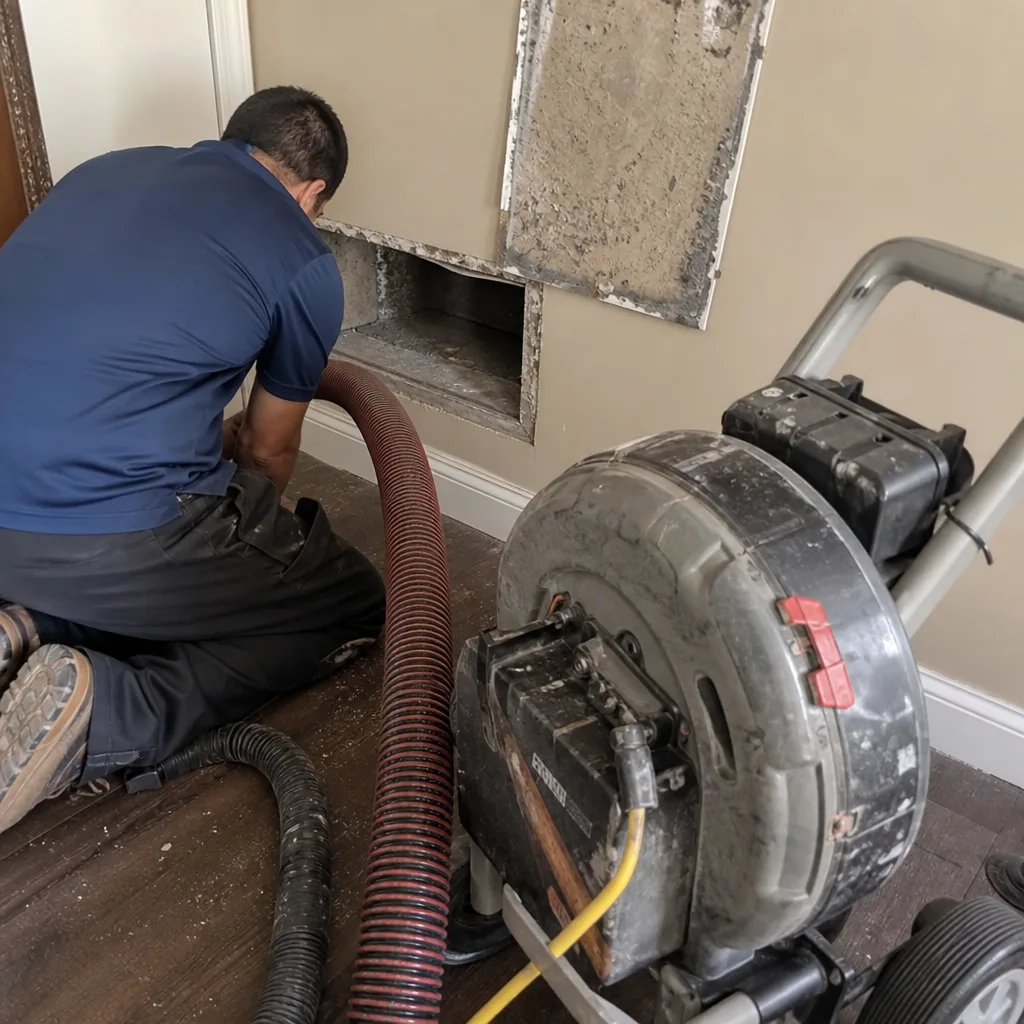 Before
 After
After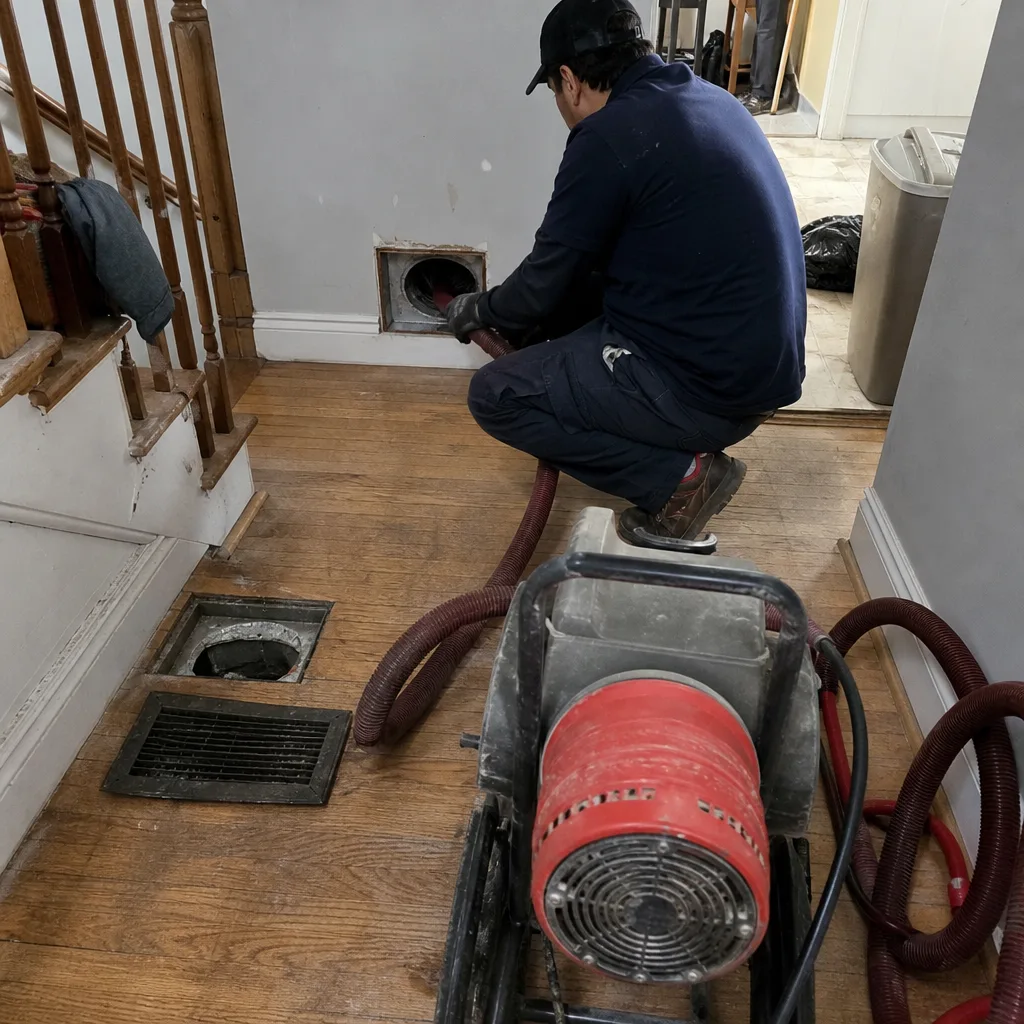 Before
 After
After