
Last updated October 15, 2026
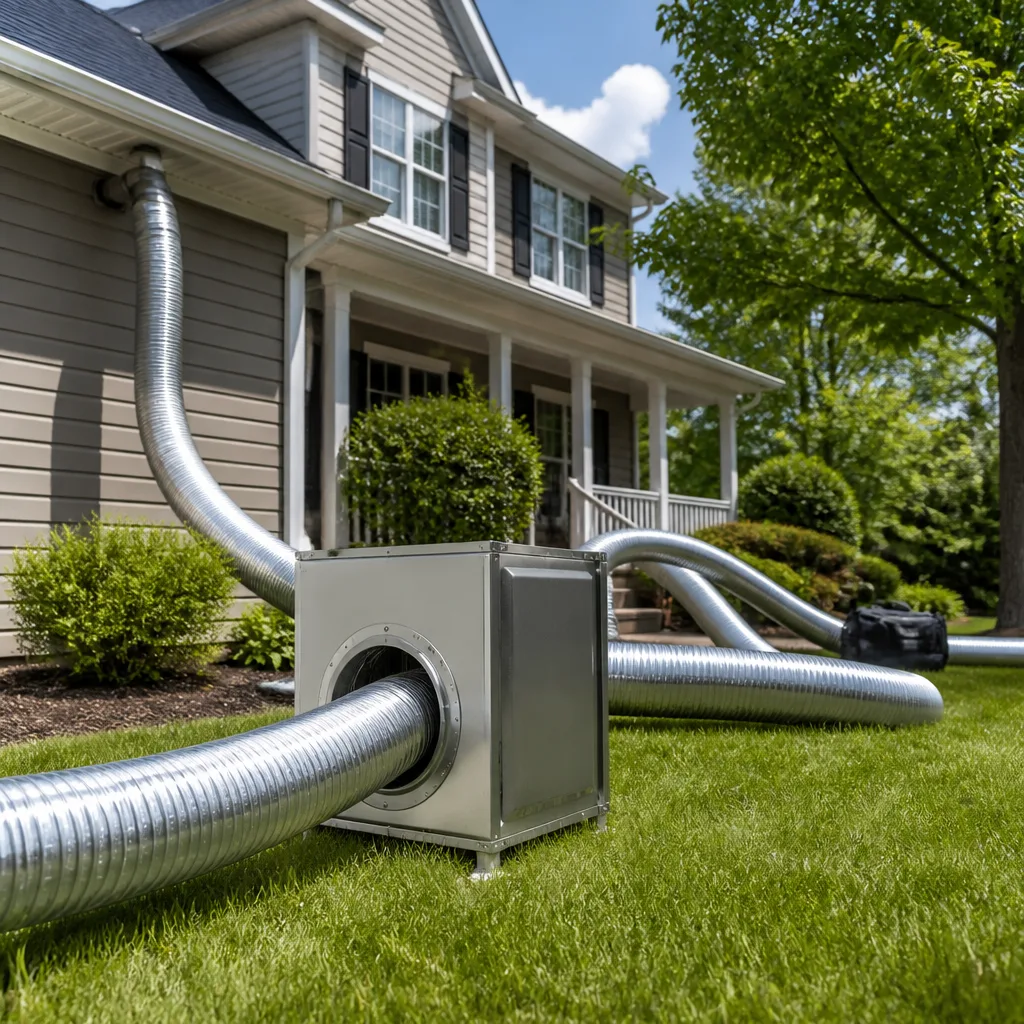 Whole-home duct cleaning
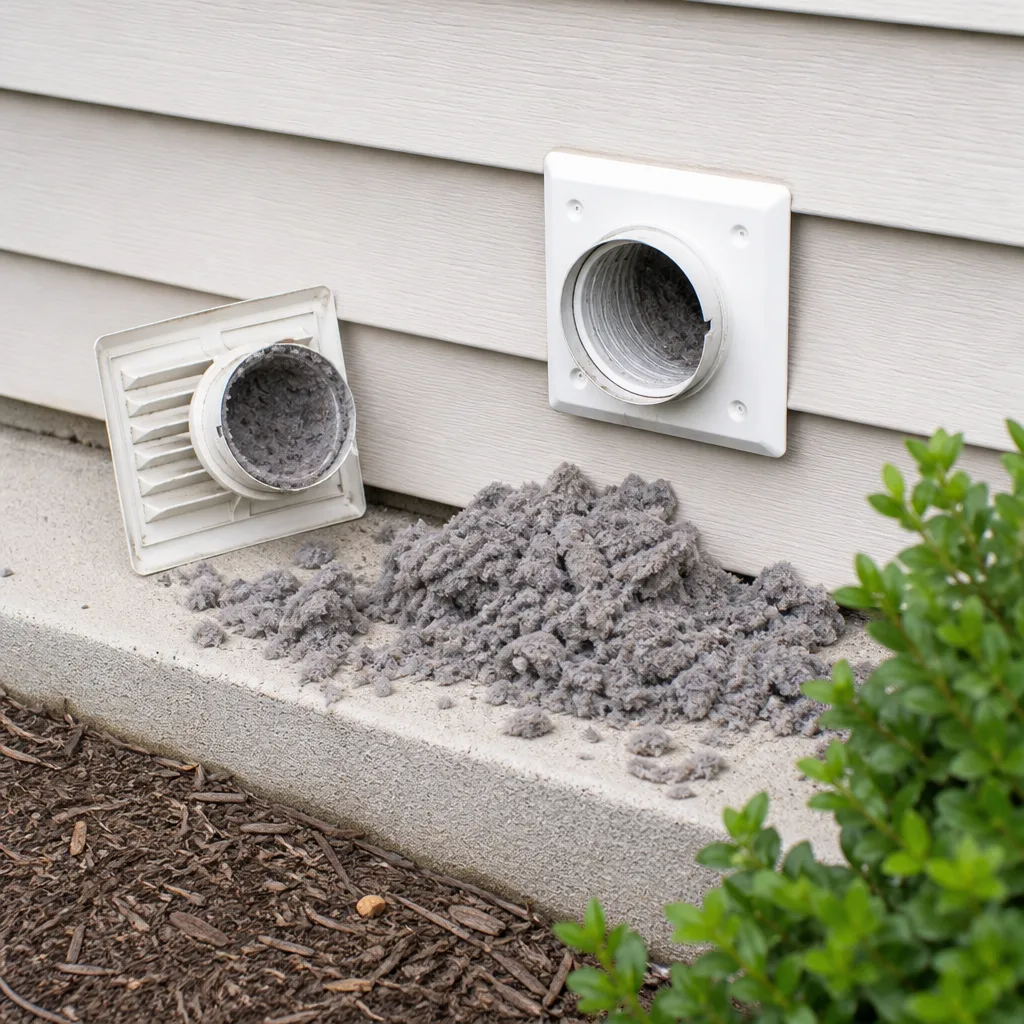 Dryer vent cleaning
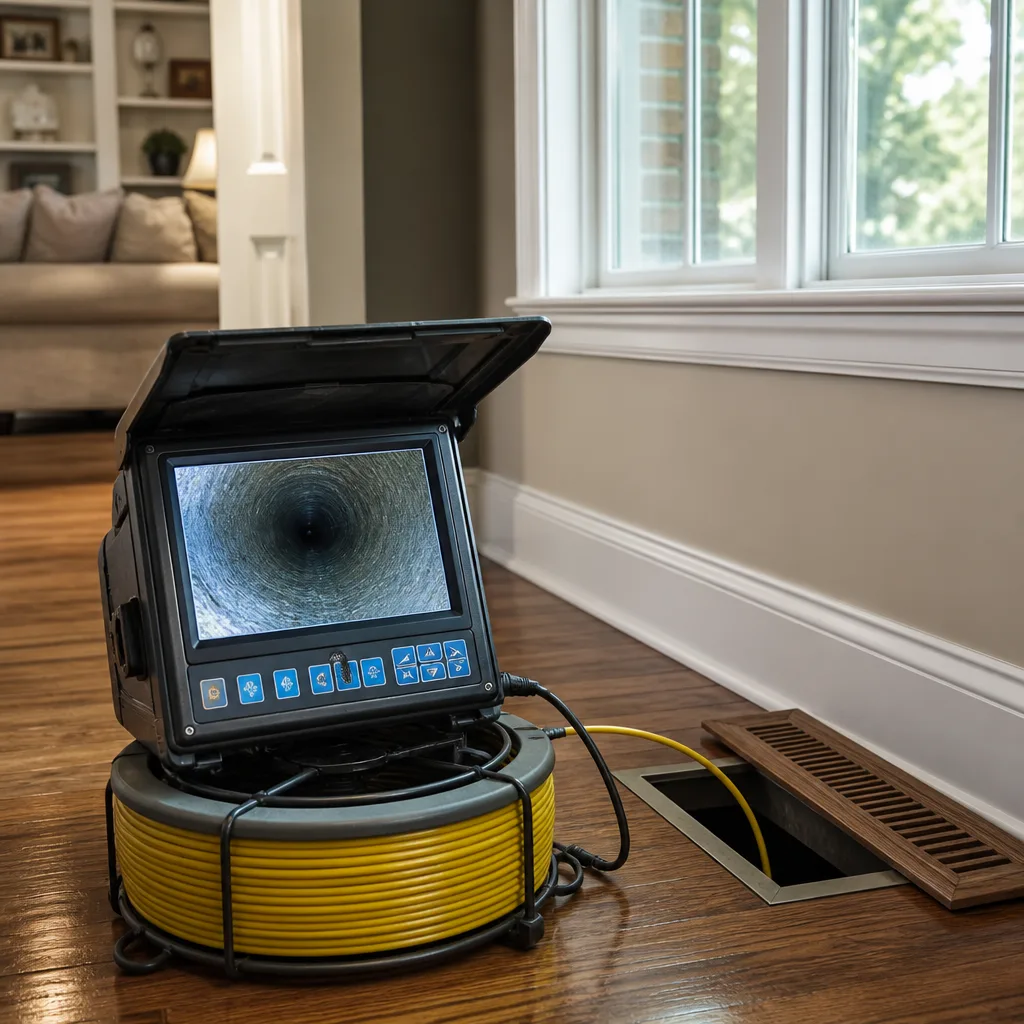 Camera inspection
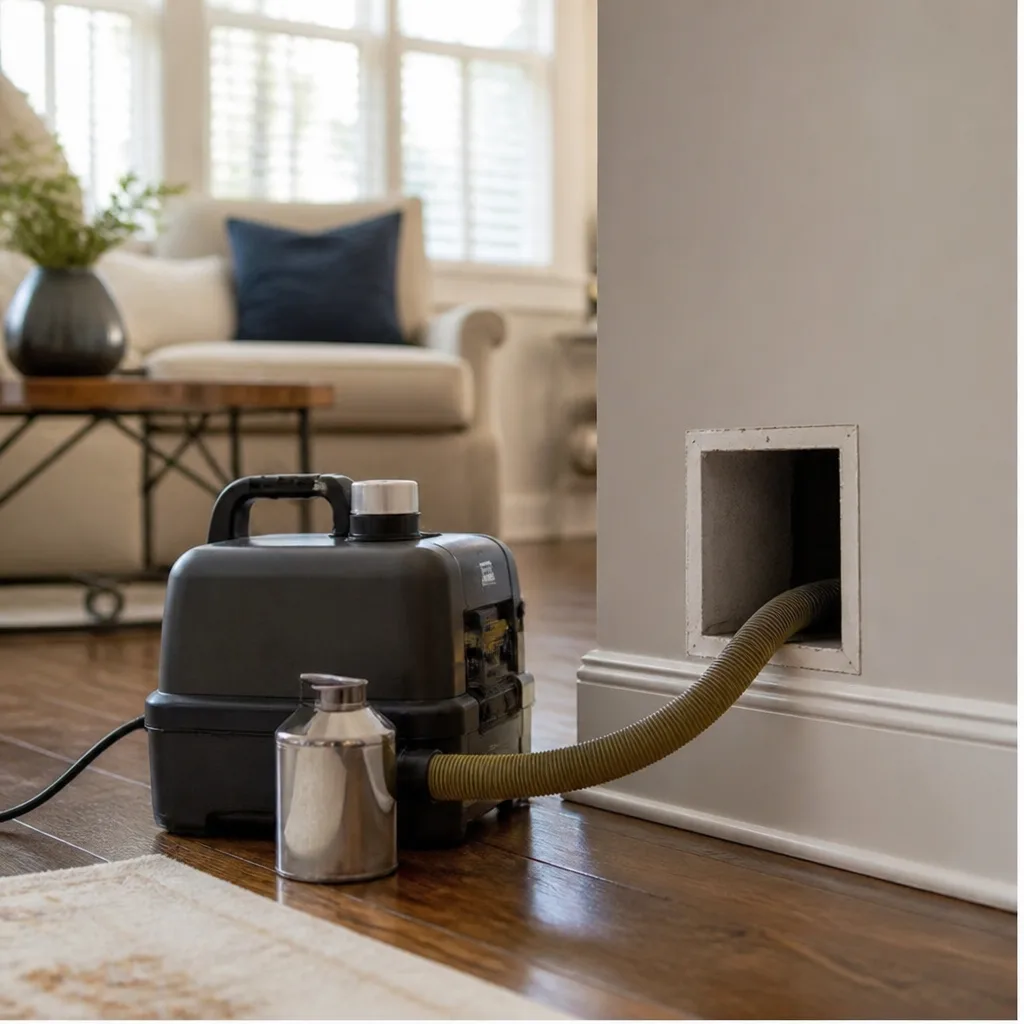 Sanitizing & deodorizing
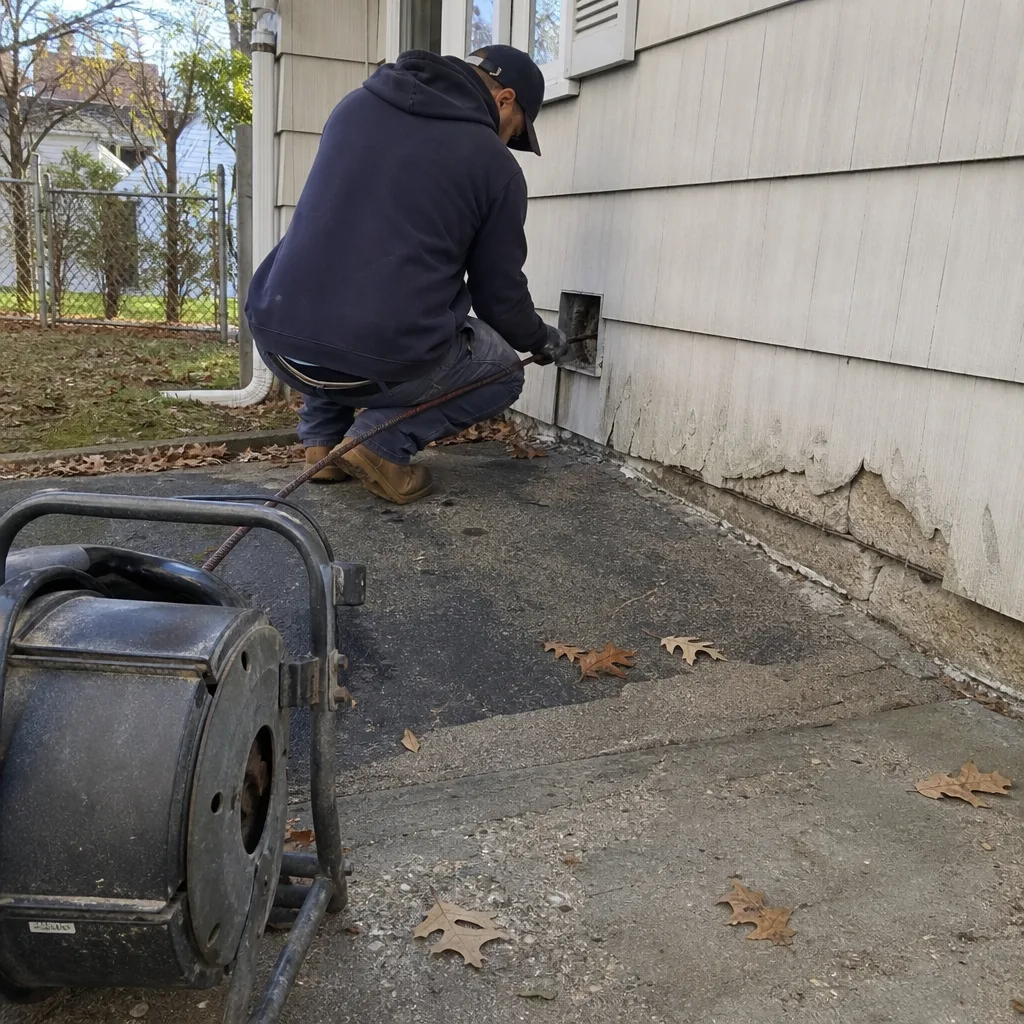
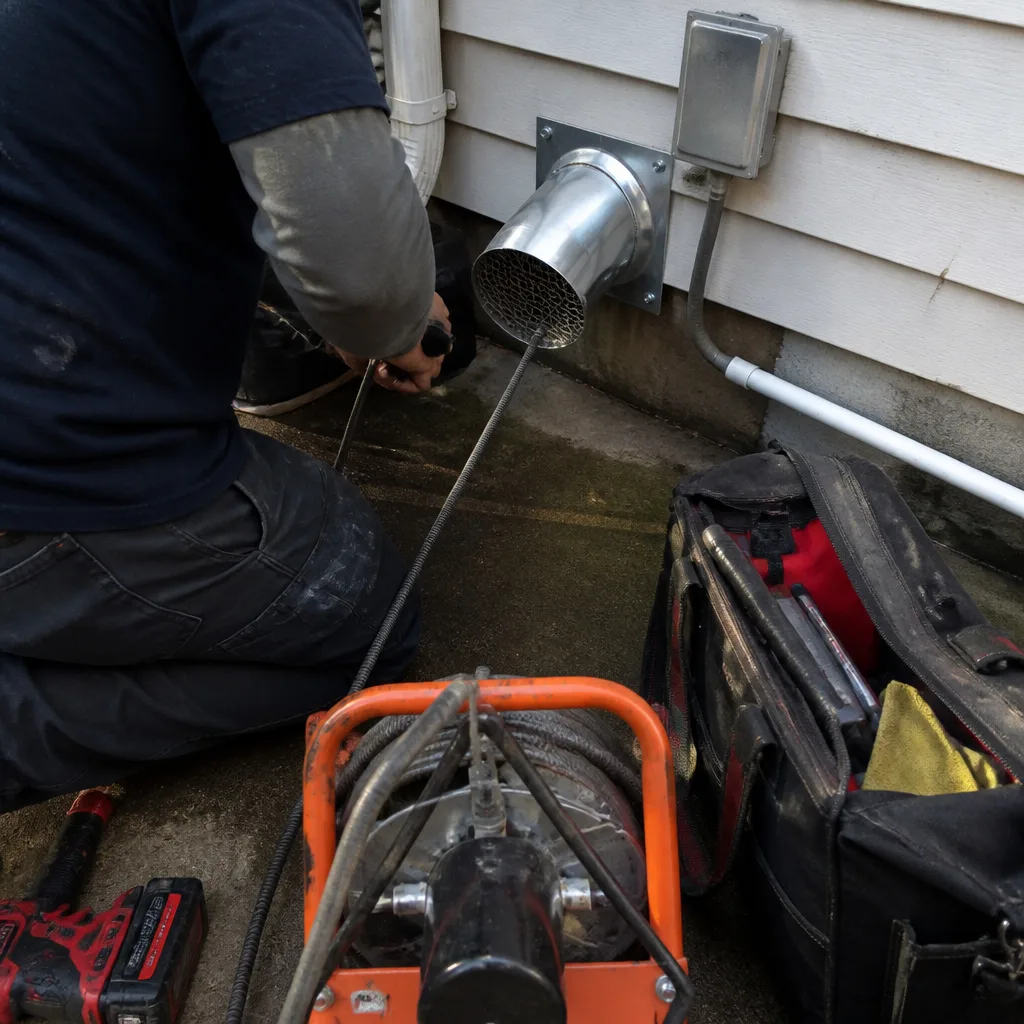
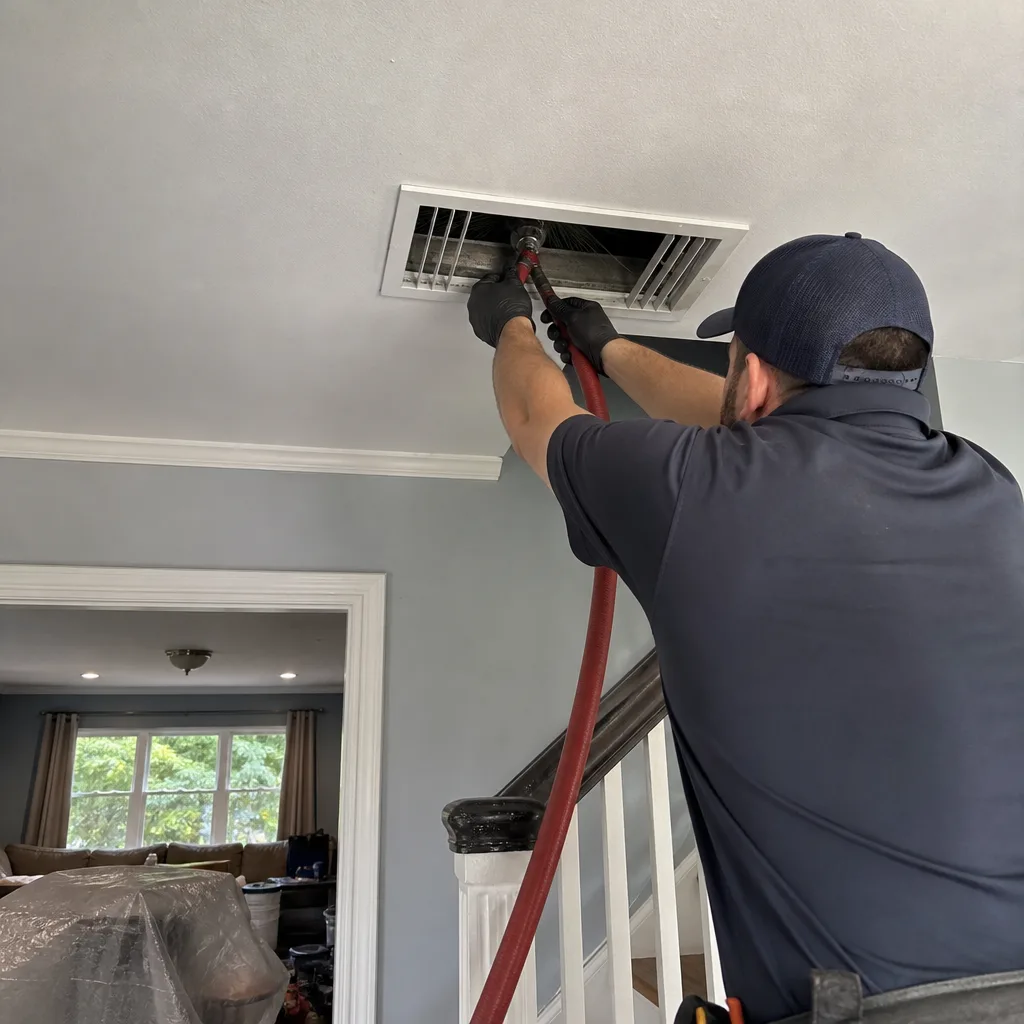
Whole-system duct and dryer vent check with before-and-after photos - you see exactly what came out of your vents
That "$99 whole-house special" is a bait ad - the real number appears once they are in your hallway, or the "clean" is a shop-vac at the register. We photograph the inside of your ducts before and after instead.
DIY vs Professional Air Duct Cleaning: The Hempstead Homeowner’s Decision Guide
Every YouTube duct cleaning tutorial shows the same thing: pull the register cover, vacuum the visible opening, replace the cover. What none of them show is what’s 15 feet down the branch duct, because the camera can’t reach it and neither can the shop vac. This guide gives Hempstead homeowners a straight answer on what DIY duct cleaning can and cannot accomplish, what it risks, and when paying for our Air Duct Cleaning services is the only move that makes sense.
Styles & brands we work with
Quick Answer
DIY air duct cleaning in Hempstead is worth doing only as routine register-level maintenance between professional cleanings. A shop vac and a hardware-store brush clean the first six to twelve inches of each visible opening; they cannot reach the trunk lines, return-air system, or air handler where most accumulated debris actually lives. For a full-system cleaning that removes embedded dust, hair, and construction debris from the entire duct network, you need negative-pressure equipment and a trained crew. The decision is not either/or; it’s a sequence: DIY maintains, professionals deep-clean.
Table of Contents
- What DIY Duct Cleaning Can Actually Do
- What DIY Duct Cleaning Cannot Reach
- The Three DIY Tasks That Genuinely Help
- Where DIY Causes Damage in Hempstead Homes
- The Cost Comparison, Done Honestly
- The Single Scenario Where DIY Is the Right Answer
- Common Mistakes to Avoid
- When to Call a Professional
- Frequently Asked Questions
- The Bottom Line
What DIY Duct Cleaning Can Actually Do
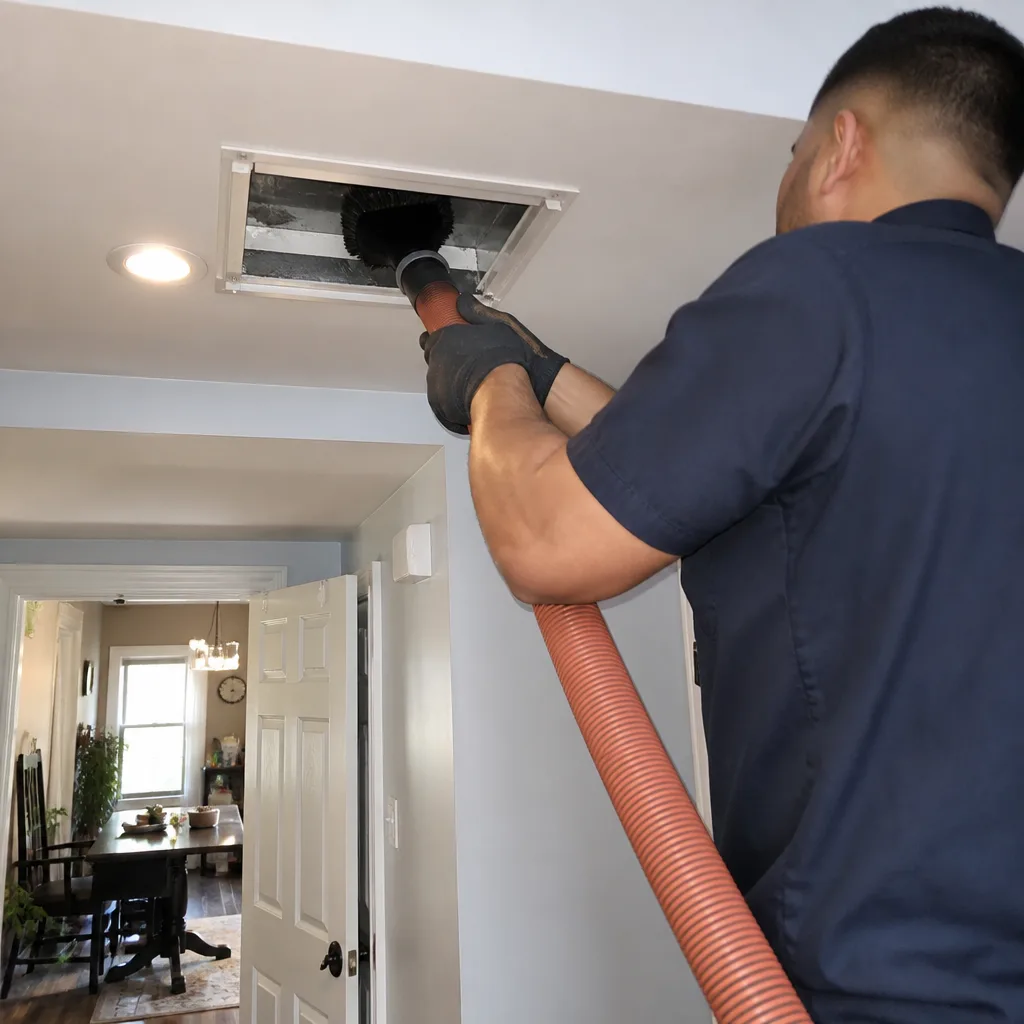
Let’s be clear about what a homeowner with a good shop vac can accomplish. The average Hempstead ranch or cape has between 8 and 14 supply registers, 1 to 3 return-air grilles, and roughly 40 to 120 linear feet of ductwork hidden behind walls, under floors, and above ceilings. The first six to twelve inches of each register are visible and reachable. You can pull the register cover, vacuum what you see, wipe the opening with a damp microfiber cloth, and replace the cover. That is a legitimate cleaning of the register opening. It removes the dust ring that forms where conditioned air meets the visible vent, and it improves the look of the room.
You can also reach a few inches into the branch duct with a flexible dryer vent brush, provided the duct run is straight off the register and the brush is gentle enough not to tear the sidewalls. In older metal duct systems common in Hempstead homes built before 1980, the brush may knock loose surface dust that you can then vacuum out. In flex-duct systems more common in homes built after 1990, the same brush can puncture the thin plastic liner. We’ll address that risk in the damage section.
What DIY Duct Cleaning Accomplishes
- Removes visible dust at the register face, improving the room’s appearance and reducing the amount of dust that re-enters the air when the system kicks on.
- Removes pet hair and lint that accumulate just inside the register opening, which is the most common visible debris in Hempstead homes with dogs, cats, or high foot traffic.
- Confirms whether the register cover itself is clogged, which is a real and often overlooked issue on floor registers in high-traffic living rooms.
- Gives you a baseline for how quickly dust re-accumulates, which helps you decide whether a deeper issue exists.
What DIY Duct Cleaning Cannot Reach
Here is the blunt geometry problem. The majority of accumulated debris in a Hempstead duct system does not sit at the register. It sits in the main trunk lines, the return-air drop, the plenum above the air handler, and on the evaporator coil. Those components are 10 to 30 feet from the nearest register, behind drywall, above ceilings, or inside the mechanical closet. No shop vac attachment from a big-box store reaches them. The hose is too short, the suction too weak at the end of a long run, and the access points do not exist without cutting an access hole or removing the air handler cover.
In a typical Hempstead cape built in the 1950s, the supply trunk runs through a crawl space or a basement ceiling and feeds individual branch ducts that extend up through the floor. Each branch duct is 6 to 12 feet long. The debris that matters, often construction dust from the original build plus decades of accumulated skin cells, textile fibers, and pet dander, is spread along the entire length. A vacuum at the visible end removes the last few inches of it. The professional method uses a negative-air machine, a large industrial unit that connects to the duct system and pulls air backward through the entire network while rotary brushes agitate the interior walls. Nikro and Abatement Technologies make the negative-air machines common in the trade. A Rotobrush rotary brush system spins through the ducts with a vacuum attached at the same point, scrubbing and extracting simultaneously. That equipment moves 2,000 to 4,000 cubic feet per minute of air, roughly 10 to 20 times what a homeowner-grade shop vac moves. The difference matters: the professional system captures debris from areas you cannot see, reach, or even verify exist without a camera inspection.
The return-air side is even more important and less accessible. The return ducts pull unfiltered air from the house back to the air handler. If you have a single central return in a hallway, which is common in Hempstead capes, that return duct is often a wall cavity or a panned joist bay, a wooden channel formed by the floor joists and a sheet metal pan nailed across the underside. You cannot clean a panned return with a shop vac. You cannot even see most of it without a camera. We’ve opened panned returns in Hempstead homes and found decades of settled dust, toy fragments, construction debris, and in one case a long-dead bird a previous owner never knew was there.
The Three DIY Tasks That Genuinely Help
Not all DIY is misguided. Three tasks genuinely improve system performance and indoor air quality, and we recommend every Hempstead homeowner do them between professional cleanings. None of these replaces a full-system cleaning, but each one slows the rate at which debris accumulates and keeps the visible portions of the system healthy. For more on what a full professional cleaning includes, see our page on Air Duct Cleaning in Hempstead.
1. Change the Air Filter on Schedule
The filter is the first line of defense for everything downstream: the coil, the blower, and the ducts themselves. We suggest inspecting it monthly and changing it every 60 to 90 days. Homes in Hempstead with pets, smokers, or recent renovation work should shorten that interval to 30 to 45 days. Use a filter rated MERV 8 to MERV 13. Filters from Honeywell and Guardsman are widely available and consistent. Do NOT buy the cheap fiberglass filters that stop nothing larger than a pebble; they let fine dust pass through and coat the coil, which reduces efficiency and creates a moisture-rich environment where biological growth starts.
2. Clean the Register Covers and Visible Openings
This is the only part of the system you can clean effectively without professional equipment, and it is worth doing. Remove each register cover, vacuum the opening as far as you can reach, wipe the cover with a damp cloth, and dry it thoroughly before reinstalling. In Hempstead homes with floor registers, pay attention to the inside edges of the register boot, the metal transition piece between the duct and the register opening. Debris settles there because the boot is often slightly wider than the duct above it, creating a shelf where dust stops. A narrow vacuum crevice tool reaches about 8 to 12 inches into most floor register boots.
3. Maintain the Return-Air Grille
The return grille captures whatever the house throws at it: dust, pet hair, lint, and occasional small objects. If you have a central return with a filter behind the grille, that filter is doing more work than any other filter in the house. Clean the grille every time you change that filter. If your system has no return filter, which is true of many older Hempstead homes, that grille is passing unfiltered air directly into the return duct, which means everything the grille doesn’t catch ends up in the duct, on the coil, and eventually back in your air. Vacuum the grille, wash it with warm soapy water, and if the system has no return filter, call a professional to discuss adding one. That single change can reduce duct contamination more than any DIY cleaning ever will.
Where DIY Causes Damage in Hempstead Homes
Here is where DIY duct cleaning goes from ineffective to harmful. The specific damage modes below are ones we have repaired or worked around in Hempstead houses. They are not hypothetical.
Flex Duct Punctures from Stiff Brushes
Flex duct, the flexible silver or black tube used in most Hempstead homes built after 1990, has a thin plastic inner liner surrounded by fiberglass insulation and a foil vapor barrier. A homeowner who pushes a stiff-bristled brush, the kind sold at hardware stores as a dryer vent brush, through a flex duct run can puncture the inner liner. Once the liner tears, conditioned air leaks into the insulation or unconditioned space, the system loses pressure on that branch, and the tear pulls in dust from the attic or crawl space. We see this in Hempstead homes every spring, when a homeowner remembers a YouTube video and decides to scrub the ducts before cooling season. The repair is worse than the original problem: a torn flex duct must be replaced, and that branch is now pulling attic air into the system until it is.
Disturbing Insulation Inside Older Metal Ducts
Homes in Hempstead built before roughly 1980 often have internally insulated metal ducts, which means the duct itself is lined with a fiberglass batt covered by a perforated metal or plastic inner wall. Over time, the inner wall degrades. A brush pressed into the duct wall can tear the liner and dislodge fiberglass fibers, which then enter the airstream. You will not see it happen. You will notice it later, as tiny glass fibers settle on furniture near the registers or cause skin irritation. A professional cleaning of internally insulated ducts requires knowing the liner is there, using a lower-pressure approach, and often recommending duct sealing afterward. Our page on Duct Sealing in Hempstead covers what sealing does and when it applies.
Creating a Contamination Event
The most common and least understood DIY outcome is this: you loosen debris without capturing it, and the next time the blower kicks on, that debris enters the living space. Negative-pressure cleaning works because the vacuum is pulling at the same time the brush is agitating. A shop vac at the register does not create negative pressure in the duct; it just moves air around near the opening. When you brush the walls of a duct run without a negative-air machine attached to the system, you knock dust loose, pull some of it back toward the register, and leave the rest airborne inside the duct. That is a contamination event: you’ve taken settled debris that was not entering the house and turned it into airborne material that will. The fix is a full professional cleaning, which now has to undo what the DIY attempt did.
The Cost Comparison, Done Honestly
The cost question is the one every Hempstead homeowner asks first, and it deserves a straight answer. The table below compares a serious DIY attempt with a professional whole-system cleaning in Hempstead. These are realistic 2025 price ranges for the Hempstead market, not national averages.
| Item | DIY Cost | Professional Cost |
|---|---|---|
| Shop vac (if you don’t own one) | $80 – $180 | Included in service |
| Flexible brush kit, extension rods, crevice tools | $40 – $120 | Included in service |
| Defogger/camera inspection (to see what you’re cleaning) | $60 – $150 for a basic borescope | Included in service |
| Whole-system cleaning of main trunk, branches, returns, air handler | Not possible with consumer equipment | $350 – $700 for a typical Hempstead home (8 – 14 registers, 1 – 2 returns) |
| Risk of flex duct tear, liner damage, or contamination event | Real; repair cost $150 – $500 per occurrence | Covered by written guarantee |
| Time | 4 – 8 hours for a thorough register-level effort | 3 – 5 hours, done by a crew |
| What you get | Clean register faces; unverified cleaning of first 12 inches | Camera verification, full-length cleaning, written price, written guarantee |
The honest cost comparison is not $150 of DIY equipment versus a $500 professional quote. The honest comparison is $150 of equipment plus 4 to 8 hours of your time plus a real risk of a $200 repair, versus a written-price professional job that includes camera verification of the same areas you cannot reach. If the DIY attempt goes sideways and the pros have to come in after, the cost is the DIY equipment plus the professional cleaning plus possibly the repair. That is the math. We have not seen a single Hempstead homeowner save money that way.
The Single Scenario Where DIY Is the Right Answer
DIY duct work is the right answer in exactly one scenario: routine register-level maintenance between professional cleanings, done with the right tools, on a documented schedule. The discipline, not the equipment, is what makes it work. Here is how to do it correctly.
Build a Register Maintenance Log
- Print a list of every register and return in your home. Label each one by room: south bedroom floor register, kitchen wall return, and so on. A Hempstead ranch with eight rooms will have 10 to 16 openings total.
- Date every entry. Write the date you cleaned each register, what you found, and what you did. A torn flex duct or a register that smells musty should be noted, not ignored.
- Use the right tools. A shop vac with a soft brush attachment, a damp microfiber cloth, and a narrow crevice tool. No stiff-bristled brushes inside the duct, no improvised tools taped to a pole.
- Do not enter the duct beyond 12 inches. That is the limit of what you can see and clean safely. Past that point, you are in blind territory, and blind territory is where the damage happens.
- Call when the log shows a problem. If you note a register with visible debris beyond the 12-inch line, a musty smell, reduced airflow, or fibers appearing near vents, that is the signal for a professional inspection.
This routine, done every 3 to 6 months, extends the interval between full professional cleanings. It does not replace them. For most Hempstead homes, a professional whole-system cleaning every 3 to 5 years is the standard, with the interval shortened for homes with pets, smokers, or recent renovations. A well-kept register log helps a technician see what has been happening at the visible end of the system, and it proves you’ve been maintaining what you can. That is worth doing. If you’re looking at other parts of the house as well, see our page on Dryer Vent Cleaning in Hempstead – the dryer vent is a separate system and needs its own maintenance rhythm.
Common Mistakes to Avoid
- Believing the shop vac equals the whole system. The shop vac cleans the visible opening. The system is 40 to 120 feet of hidden duct, a coil, a blower, and a return network. Cleaning the visible part and declaring the system clean is like washing the faucet and declaring the pipes clean.
- Using a stiff-bristled brush inside flex duct. Flex duct in Hempstead homes tears easily. Once torn, the branch leaks conditioned air into the attic or crawl space and pulls debris back into the airstream. The repair costs more than a professional cleaning would have.
- Removing the air handler cover to “clean the coil” without training. The coil is where cold refrigerant meets warm air. Cleaning it wrong, or with the wrong chemical, can bend the fins, damage the coil, or flood the blower compartment. A homeowner can turn a $500 cleaning into a $2,500 coil replacement.
- Ignoring the return-air side entirely. Most Hempstead homeowner DIY efforts focus on supply registers because those are visible. The return side, especially panned joist returns in older capes and ranches, holds more debris and is completely inaccessible to homeowner tools. Ignoring it leaves the majority of the contamination in place.
- DIY duct cleaning immediately after a renovation. Drywall dust, sawdust, and debris from a Hempstead kitchen or bath renovation should never be disturbed by a homeowner brush. That debris is abrasive and fine; a professional negative-air cleaning is the only safe way to remove it without spreading it through the house during the next blower cycle.
- Falling for the “you only need to clean what you can see” logic. Dust visible at the register is a symptom. The main body of accumulated debris sits deeper in the system. Treating the symptom and not the system means the symptom returns within weeks, and the deeper problem continues to grow.
When to Call a Professional
Call when you see visible mold growth on a register, on the inside wall of the return, or on the air handler itself. Call when you’ve had a renovation and the system has pulled drywall dust through the return. Call when you’ve moved into a home where the previous owner had pets and you don’t know when the ducts were last cleaned. Call when the system has not been cleaned in 5 or more years, when you see fiberglass fibers around the registers, or when you’ve made a DIY attempt that loosened debris and you’re now breathing more dust than before. None of these situations resolves itself. Hollis Air Duct Hempstead offers free estimates in Hempstead. Call (516) 559-4917 and a live person answers, 24/7.
Frequently Asked Questions
Professional whole-system air duct cleaning in Hempstead typically costs between $350 and $700 for a standard single-family home with 8 to 14 registers and 1 to 2 returns. The price is written down before any work starts and does not move at the door. Call (516) 559-4917 for an exact quote – estimates are free, and the price you’re quoted is the price you pay.
You can clean the first 6 to 12 inches of each visible register opening with a shop vac and a soft brush attachment, and that is worth doing as routine maintenance. You cannot clean the main trunk lines, branch ducts, return-air system, or air handler with consumer equipment. Those areas hold most of the accumulated debris and require negative-pressure professional equipment to clean safely and verify.
Cheaper quotes usually reflect a partial job: a few registers cleaned, the return ignored, the air handler untouched, and a final price that grows once the crew is inside. In Hempstead, the bait-and-switch duct cleaning model is alive and well. A legit quote is a written, whole-system price: every register, the trunk, the returns, the air handler, and camera verification included. If the quote seems too low to be true, ask what “the whole system” includes in writing. Then call (516) 559-4917 for a written quote you can compare.
Most Hempstead homes need professional whole-system duct cleaning every 3 to 5 years. Homes with pets, smokers, or recent renovation work should shorten that interval to every 2 to 3 years. Between professional cleanings, homeowners should change filters every 60 to 90 days, clean register covers quarterly, and document the work in a simple log-our Seasonal Air Duct Cleaning Care for Hempstead: Year-Round Homeowner’s Guide has a schedule you can follow. That routine slows accumulation and extends the interval.
Ask for camera verification. A legitimate professional cleaning includes before and after photos or video from inside the trunk lines and returns, taken with a camera that reaches the areas you cannot see from the register. Without camera verification, you are taking the crew’s word on faith. Before and after photos of your own ducts are the only proof that matters. If a company won’t provide them, that is your answer.
The danger is mostly to the duct system, not the homeowner, though pulling a ladder-mounted shop vac through a Hempstead crawl space has its own risks. The real risk is damage: torn flex ducts, dislodged insulation inside older metal ducts, and disturbing settled debris without capturing it, which then circulates through the house. If you’ve already made a DIY attempt and the air feels dustier than before, call (516) 559-4917 for a professional cleanup.
The Bottom Line
DIY duct cleaning is maintenance, not replacement, and the distinction is not a sales pitch. It is geometry. The tools a Hempstead homeowner can buy at a hardware store cannot reach the parts of the system where debris accumulates. What they can reach, the register faces and the first few inches of each branch, is worth cleaning regularly, and doing so well will keep your system healthier and extend the interval between professional jobs. What they cannot reach requires negative-air equipment, a camera, and someone who knows what a panned joist return looks like. Do the DIY work you can do well. Keep the log. Change the filters. For more guides & resources, visit our blog. And when the log or the house tells you the system needs a real cleaning, call a company that writes the price down before it touches a single register and stands behind the work for a full year. That is how a Hempstead homeowner wins this decision.
Written by Roy Castellanos, Owner at Hollis Air Duct Hempstead, serving Hempstead since 2004.
See the difference
 Before
 After
After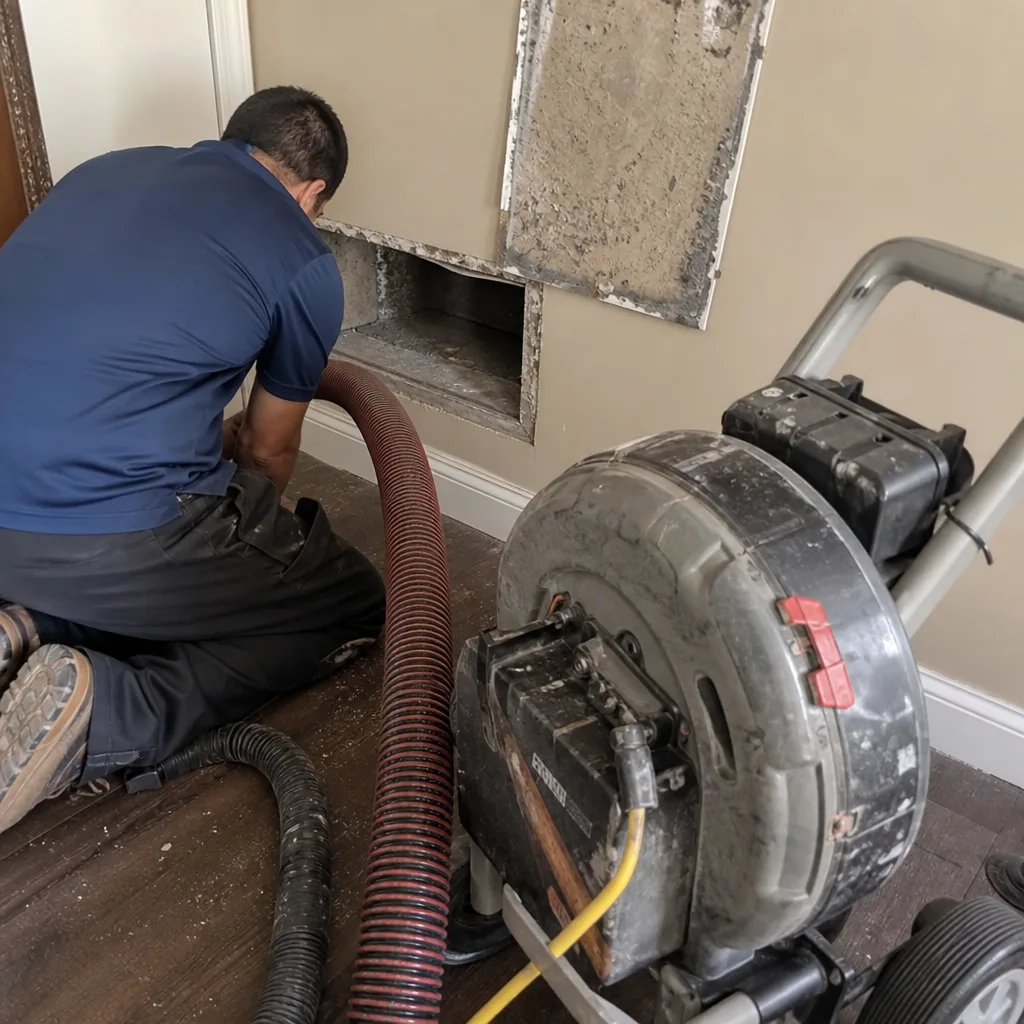 Before
 After
After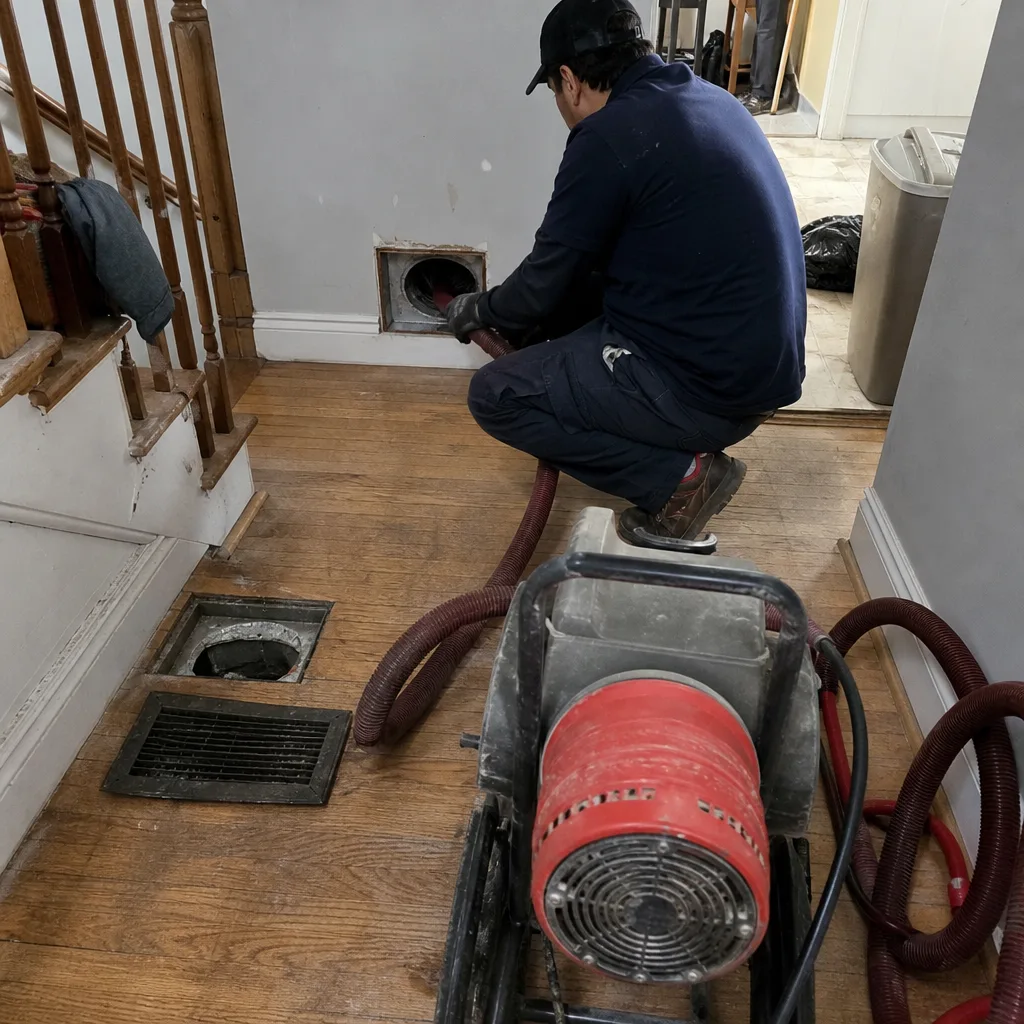 Before
 After
After