
Last updated October 15, 2026
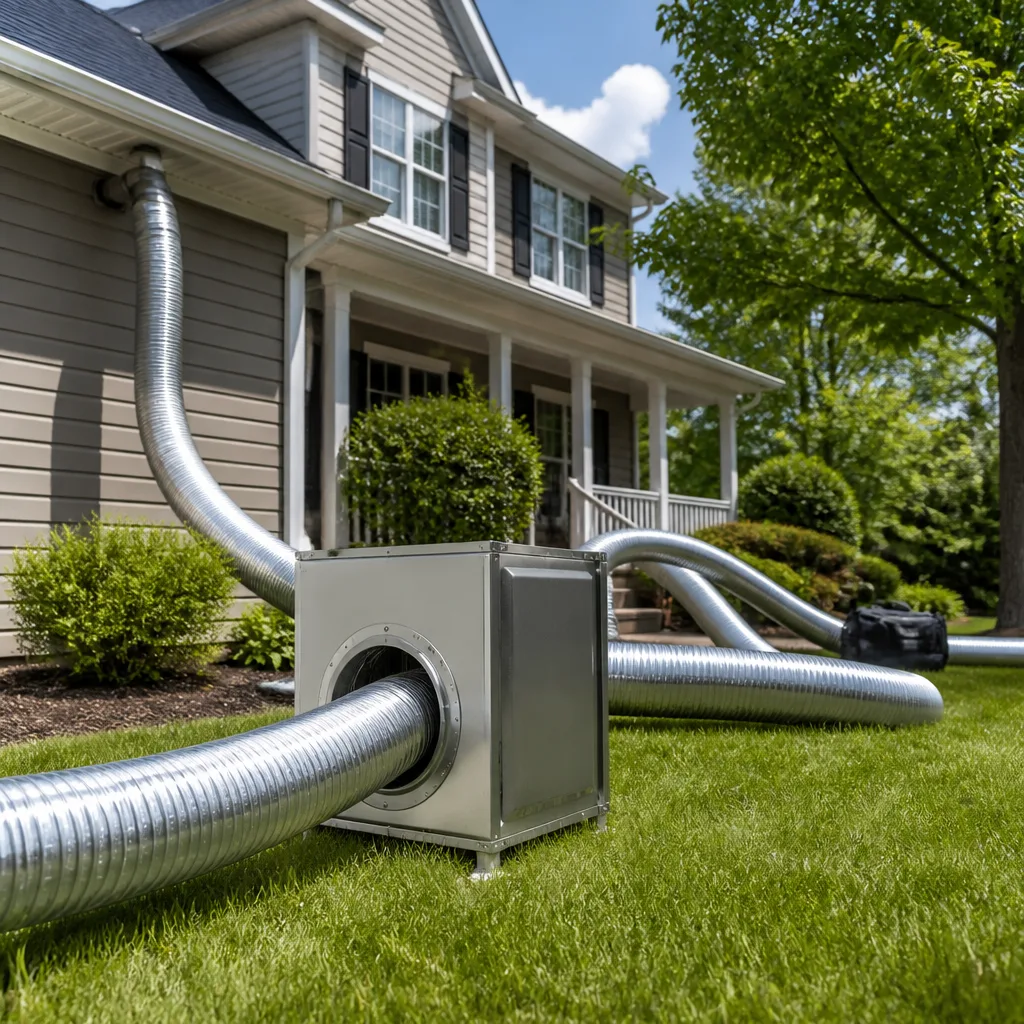 Whole-home duct cleaning
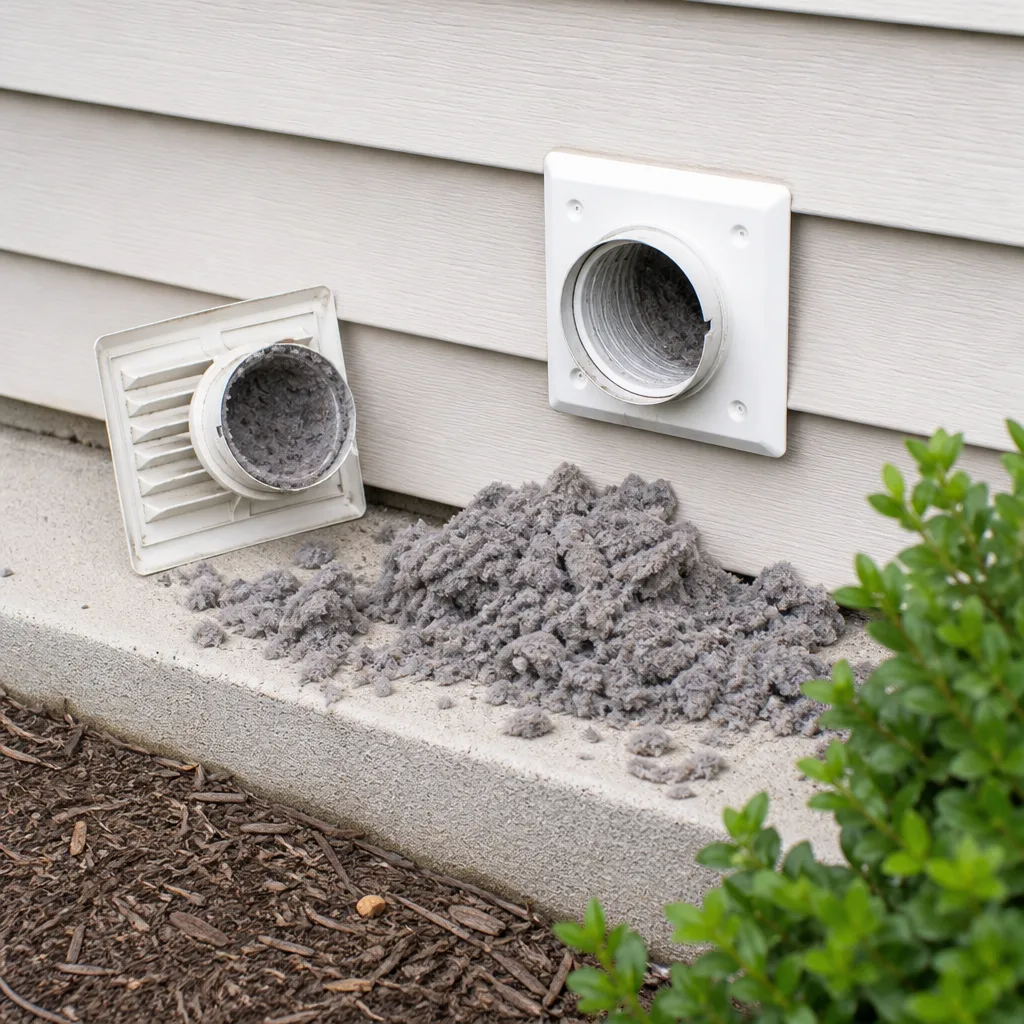 Dryer vent cleaning
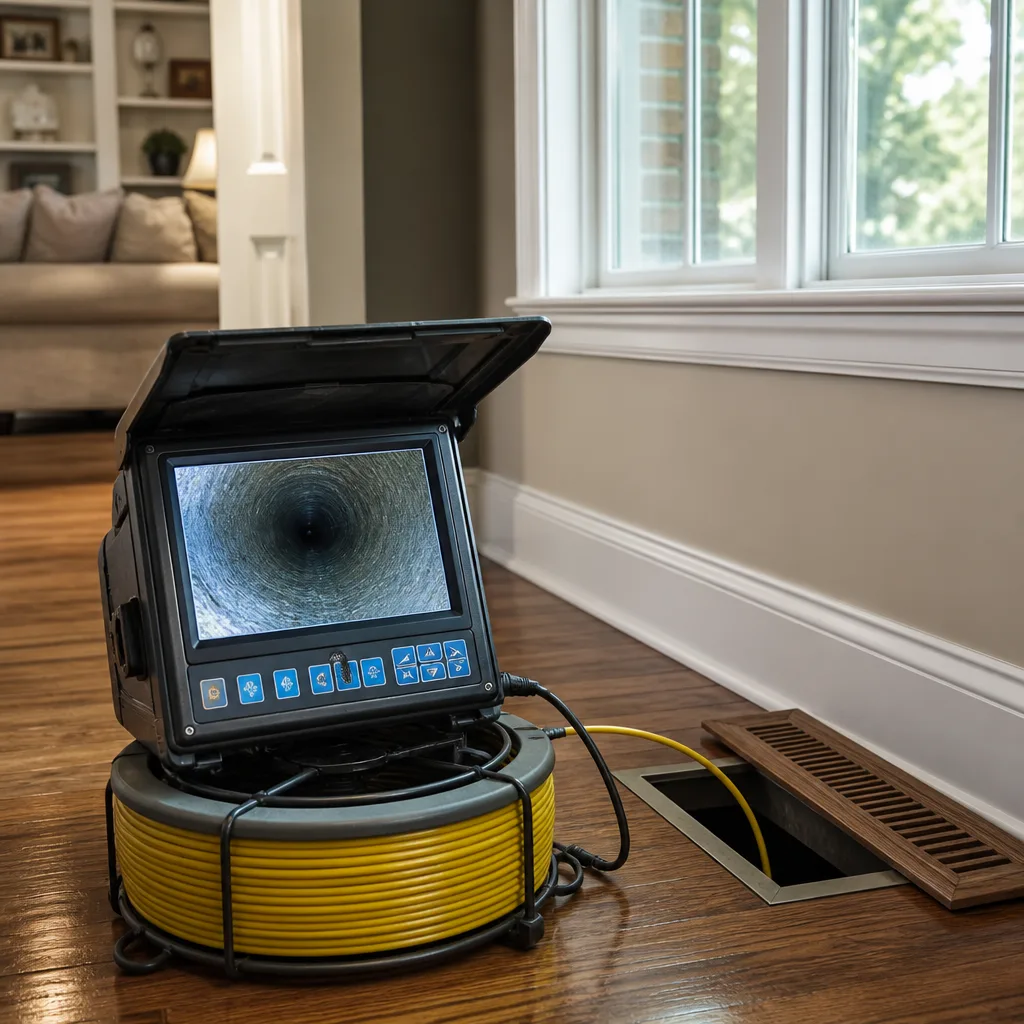 Camera inspection
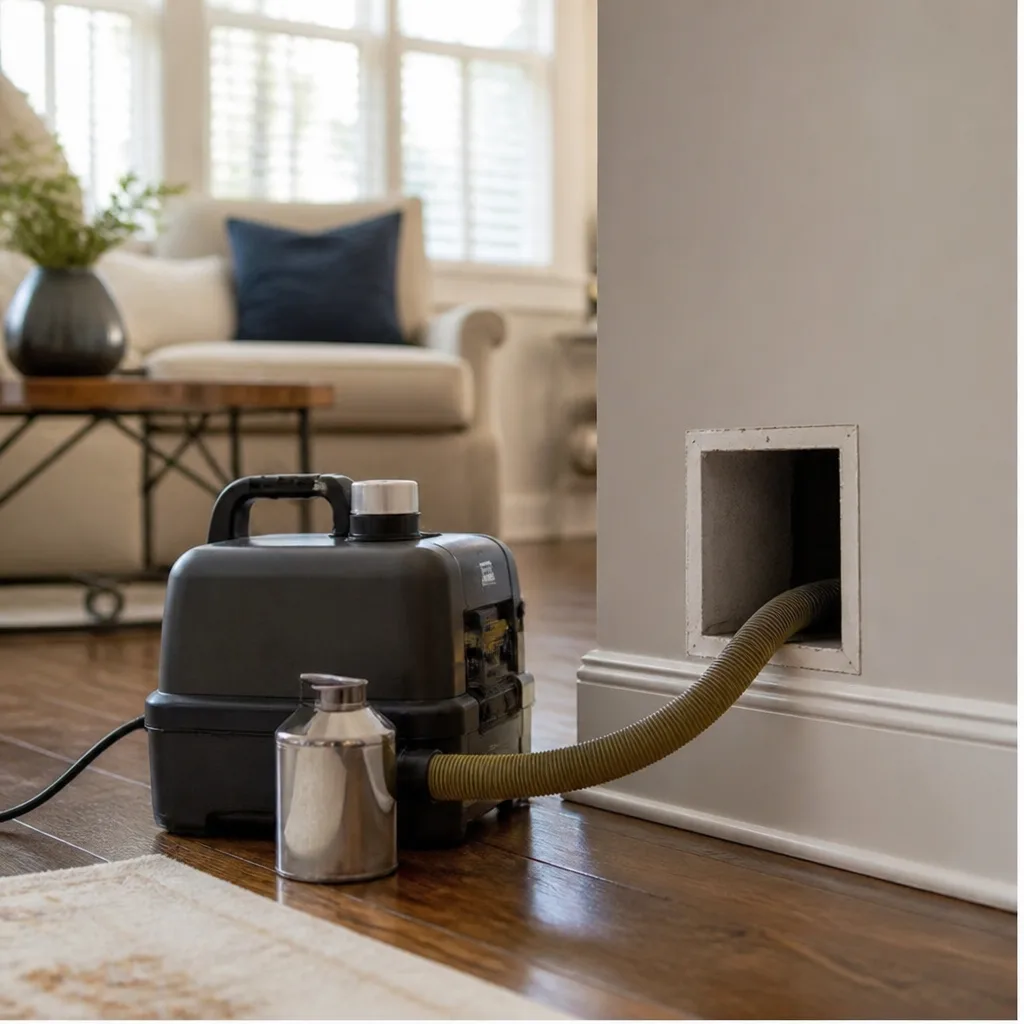 Sanitizing & deodorizing
Whole-system duct and dryer vent check with before-and-after photos - you see exactly what came out of your vents
That "$99 whole-house special" is a bait ad - the real number appears once they are in your hallway, or the "clean" is a shop-vac at the register. We photograph the inside of your ducts before and after instead.
Seasonal Air Duct Cleaning Care for Hempstead: Year-Round Homeowner’s Guide
Spring is the worst time to schedule a duct cleaning in Hempstead. By the time the AC kicks on in May and you catch that musty, sour smell from the registers, the moisture that fed that growth has been sitting inside your ductwork since December. The problem wasn’t caused by spring. It was incubated all winter, hidden behind closed dampers and low airflow. This guide walks through the four distinct stress periods Hempstead’s climate puts on your duct system each year, what actually builds up during each one, and the specific checks that make sense in October versus April versus July. For more guidance, see our Air Duct Cleaning Maintenance Checklist for Hempstead Homeowners. We’ll give you concrete price ranges, a 12-month maintenance log you can keep yourself, and clear signs that separate a normal seasonal cleaning from a duct problem that needs sealing or repair.
Quick Answer
Air duct cleaning in Hempstead is best done once per year, timed to the season that creates the most contamination in your home. For most Hempstead homes, that’s early fall, before the first heating cycle, because the highest-risk contamination event of the year happens when your blower fires up and pushes a summer’s worth of dust, pollen, and HVAC debris through the system at once. Expect to pay $350 to $650 for a whole-home cleaning on a typical Hempstead single-family house, and plan an additional $100 to $200 if dryer vent cleaning is included. For a detailed breakdown, see our Air Duct Cleaning Cost Breakdown: The Hempstead Homeowner’s Reference for 2026. The exact right timing depends on your fuel source, filter habits, and whether anyone in the house has allergies or asthma.
Styles & brands we work with
Table of Contents
- Fall (October-November): The Highest-Risk Transition of the Year
- Winter (December-February): Monitoring a System Running 8+ Hours Daily
- Spring (March-May): The Post-Heating Assessment
- Summer (June-August): Humidity, the AC Coil, and Downstream Contamination
- How to Build a 12-Month Duct Maintenance Log
- Common Mistakes to Avoid
- When to Call a Professional
- Frequently Asked Questions
- The Bottom Line
Fall (October-November): The Highest-Risk Transition of the Year
Here’s what most guides won’t tell you about Hempstead specifically: the switch from air conditioning to heat is not a neutral event. It’s the single highest-risk week of the year for your duct system. All summer, your AC pulls warm, humid outdoor air across the cooling coil, condensing moisture that traps dust, pollen, and mold spores on the coil’s surface. That’s normal. What’s not normal is what happens the first cold week in November when you flip the thermostat to heat. The dust and debris caked on the coil and inside the supply ducts dries out, loosens, and gets blown through the system by the furnace blower at full speed. Homeowners smell it as a burning-dust odor, and in the worst cases, fine particulate matter cakes onto the heat exchanger surface where it can smolder.
In our experience working in Hempstead, homes on the north side of town near Hofstra and the older housing stock west of Clinton Street tend to show heavier fall contamination, mostly because the duct systems are older and the returns pull from basements that spent the whole summer humid. The action that matters in October and November is not cleaning, exactly. It’s inspection and removal of what summer left behind. The most defensible timing for a full duct cleaning in Hempstead is after the leaves have dropped, before the first hard heat cycle. That means roughly the last two weeks of October through the first two weeks of November in most years.
What a fall inspection should cover:
- Visible debris at the return grilles and supply registers after a week of heat operation
- Burn-off odor that lasts longer than 30 minutes when the furnace first fires
- Filter condition at the start of heating season, especially if the AC filter was neglected in August or September
- Signs that summer humidity left moisture in the ducts: dark spotting at register edges, musty odor when the blower runs
If debris, odor, or moisture signs are present, the right call is a full system cleaning before the heating load gets heavy. That’s also the ideal time to evaluate whether your ducts need sealing, because the same leaks that waste cooled air in July waste heated air in January. The air duct cleaning service in Hempstead we provide includes a written report of exactly what was pulled from the system, which is useful if you’re tracking contamination year over year.
Winter (December-February): Monitoring a System Running 8+ Hours Daily
During a Hempstead winter, your furnace blower runs more hours than it does in any other season. Eight hours a day is common in January, and in a cold snap it can run nearly continuously. That’s the context for everything that happens inside your ducts between December and February. Contamination that was manageable in October becomes a problem in January because the system is moving air through it for twice as many hours each day. The failure mode is not dramatic. It’s gradual filter loading, rising static pressure, and uneven register output from room to room.
What to monitor, specifically, when the system is running this hard:
- Filter loading rate. In winter, a 1-inch filter in a Hempstead home with a forced-air furnace will often load visibly within 30 days. If your filter is dark gray rather than white after a month, that’s not a defective filter. That’s airborne dust being caught before it enters your ducts, and it means you should plan on a 30-day replacement cycle through the heating season.
- Static pressure symptoms. The practical signs of a high-static system are not technical. You’ll notice that closing one bedroom door makes the room stuffy within an hour, or that the system gets louder when the filter is replaced with a higher-MERV version. Both indicate the blower is working against resistance. A restricted duct system runs hotter, costs more to operate, and pushes more contamination through any existing leaks.
- Register output differences. On a cold evening, walk the house and put a hand in front of each register. A room that’s noticeably weaker than the others is not a minor annoyance in February. It means air is taking an unintended path to get there, and in a Hempstead winter that path often runs through an unheated crawlspace or an exterior wall cavity.
One time-saving exercise we recommend: mark the rooms that feel weak in February, because they’ll be the same rooms that feel warm and stale in July. The duct issues that show up in winter and summer are often the same leaks and restrictions, presenting as different comfort complaints. If you call us for duct sealing in Hempstead, the winter notes you keep are the starting point for the inspection, and they frequently cut the diagnostic time in half.
If your home has radiators or baseboard heat instead of a forced-air furnace, the winter calculus changes. You’re not running ducts at all during heating months, and that means the fall cleaning is less urgent but the spring post-heating assessment becomes more important, because the duct system spends four months as a cold, dark, sometimes humid space with no airflow to dry it out.
Spring (March-May): The Post-Heating Assessment
By the time March arrives in Hempstead, your heating system has been running for four to five months. If you heat with oil or gas, the combustion process leaves residue behind, and some of that residue ends up in the secondary ducts and the area around the heat exchanger. Homeowners rarely think about this because it’s invisible until the system switches back to cooling and moisture hits those deposits. The musty smell people attribute to “dirty AC ducts” in May is frequently the product of a full winter’s worth of combustion byproducts and settled household dust being rehydrated by the first humid weeks of spring.
The post-heating assessment is not a deep technical inspection. It’s a set of checks any homeowner can do in about 20 minutes, ideally in late March or early April, before the cooling season starts:
- Pull the filter and inspect the filter slot with a flashlight. If the metal or filter frame itself has a visible film of gray or brown residue, that residue is also inside the return duct, and it will re-enter the airstream when cooling starts.
- Check the registers in rooms that were heated most heavily, usually the living room and any room with a closed door overnight. A visible dust ring around the register face, especially a dark ring rather than a light gray one, means fine particulate is being deposited at the supply points, which means it’s also being deposited inside the ducts leading to those registers.
- Run the fan-only setting for 10 minutes on a dry day. If you smell anything musty or stale during that run, you’ve got moisture-related biological material somewhere in the system, and no amount of filter changing will remove it.
- Look at the burner area of a gas-fired furnace as a proxy for what’s inside the ducts. If the burner compartment has a visible dust layer, the blower has been pulling that same dust through the return side all winter.
One thing Hempstead homeowners should know: the oil-to-gas conversion homes scattered through the older neighborhoods near the Turnpike can have significantly more accumulated residue in the ducts than homes that have always been gas. Oil burners produce more particulate matter per season than gas burners, and if the home was converted but the ducts were never cleaned afterward, that oil-era residue is still in there. That’s not a scare tactic. That’s a physical fact of how combustion residue behaves. A spring inspection is the cheapest way to know whether you have a normal amount of winter accumulation or a conversion-era residue problem that needs full removal.
Summer (June-August): Humidity, the AC Coil, and Downstream Contamination
The single most contamination-prone component in a Hempstead home is not the duct. It’s the evaporator coil. That’s the cold coil inside the air handler or furnace cabinet that refrigerant runs through when you’re cooling. When the AC runs, that coil sits at roughly 40 degrees Fahrenheit. Humid Long Island air passes across it, water condenses on the surface, and that water traps whatever the filter didn’t catch: fine dust, pollen, pet dander, and mold spores. That wet, dark, food-rich surface is the perfect environment for biological growth, and every bit of it downstream, meaning in the supply ducts and at the registers, got there by way of the coil.
Hempstead’s summer humidity is the reason this matters more here than it would in a dry climate. From June through August, the coil is wet almost continuously. The growth that starts on the coil surface moves into the supply ducts as spores and as debris carried by the airflow. You’ll smell it before you see it. A sour, damp odor from the registers when the AC first kicks on is the most reliable early signal that the coil and downstream duct surfaces need attention.
What you can monitor in the summer without opening the system:
- Condensation at the registers. On very humid days in Hempstead, a small amount of condensation on metal register faces is normal. Condensation that persists after the AC has been running for 20 minutes, or condensation inside the duct visible through the register opening, means the supply air is carrying more moisture than it should, and the coil is likely not draining properly.
- Air temperature from the supply register. A properly charged and reasonably clean system will deliver supply air roughly 15 to 20 degrees colder than the return air. If that split shrinks below 12 degrees on a hot afternoon, restricted airflow is pushing the coil out of its efficient range, and the restrictions often begin with accumulated debris on the coil surface itself.
- Filter color at the two-week mark. A filter that’s visibly loaded after 14 days of summer operation is telling you that the return side of the system is pulling in more particulate than it should, and a portion of that particulate is ending up on the coil and in the supply ducts.
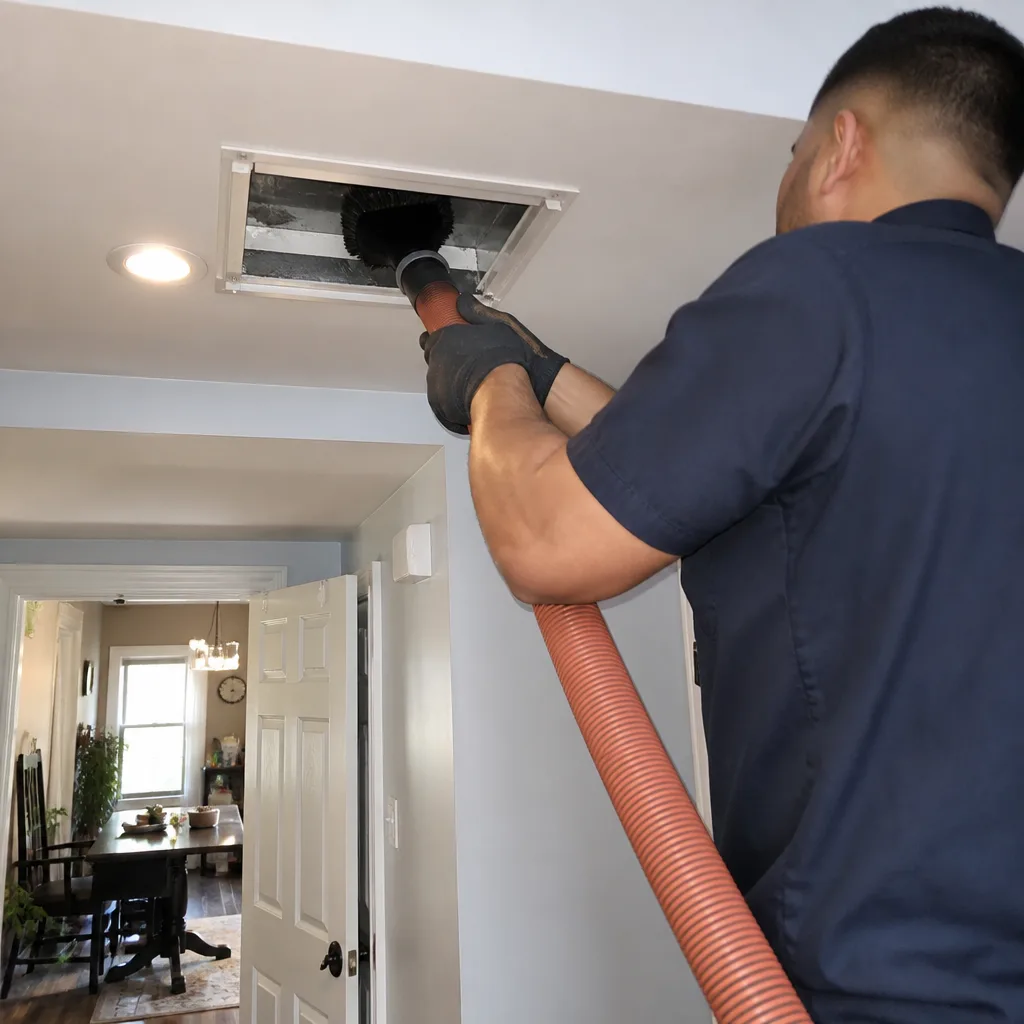
This is also the season when our Air Duct Cleaning services matter most. A proper cleaning in a humid climate requires negative pressure, meaning the air is pulled through the duct system and exhausted outside, not pushed around the home. Our crews run Nikro negative-air machines on every job, which is the same principle commercial remediation crews use, and the reason is simple: without negative pressure, the debris loosened by the rotary brush system ends up in the house, not in the collection unit. In Hempstead’s summer humidity, that distinction is the difference between a cleaning that solves a smell problem and a cleaning that makes it worse.
If you had a spring post-heating assessment that came back clean but you’re now smelling musty air in July, the contamination source is the coil and the ducts immediately downstream of it, not the return side. That points to a coil cleaning plus supply duct cleaning, not a full return-side cleaning, and it’s why a contractor who greets every summer smell complaint with the same whole-home quote is guessing. The diagnostic question is always: where did the moisture collect, and what grew there. The Hollis Air Duct Hempstead home service area covers the full range of coil and duct cleaning so the answer dictates the scope of work, not the other way around.
How to Build a 12-Month Duct Maintenance Log
The single most useful thing any Hempstead homeowner can do for their duct system costs nothing: keep a log. For more guides & resources, explore our blog. The reason it makes your next contractor estimate faster and cheaper is that the diagnostic work, the part where a technician asks you a dozen questions about when you noticed a smell, which rooms feel stale, and how often you change the filter, is already done. You hand over the log, and the inspection starts from your notes instead of from a blank sheet. In our experience, that saves 30 to 40 minutes on a typical estimate and often narrows the problem area before any equipment comes off the truck.
Here’s the log we recommend, organized by what matters in each season:
- Fall: Note the first day you run heat, any burn-off odor and its duration, filter condition on the first heating day, and the date of any cleaning or inspection.
- Winter: Note filter change dates, any room that feels colder than the rest of the house, any door that gets stuffy when closed, and any unusual blower noise.
- Spring: Note the results of the post-heating register and filter inspection, any musty smell on first AC run, and the supply air temperature on a warm day if you take it.
- Summer: Note any condensation issues, any change in cooling output, filter loading rates at 14 and 30 days, and any odor from the registers when the system starts.
Plus four one-line entries that apply year-round: every filter replacement (date and what you saw on the old filter), every time you vacuum or clean the return grilles, any renovation work that produced dust, and any water event in or near the mechanical room. A water event in a Hempstead basement after a heavy rain is a duct system event. That’s how moisture enters the return side and how biological contamination starts.
The log also protects you from paying for work you don’t need. If a contractor tells you in April that your ducts are “heavily contaminated” and you have a November cleaning report from the previous fall showing the system was brought to baseline, you know the claimed contamination built up over a single winter, and that changes the question from “how much to clean it” to “what changed to cause that much buildup in five months.” That’s a much more useful conversation, and it’s the kind of thing that separates a homeowner who gets a straight answer from a homeowner who gets a sales pitch.
See the difference
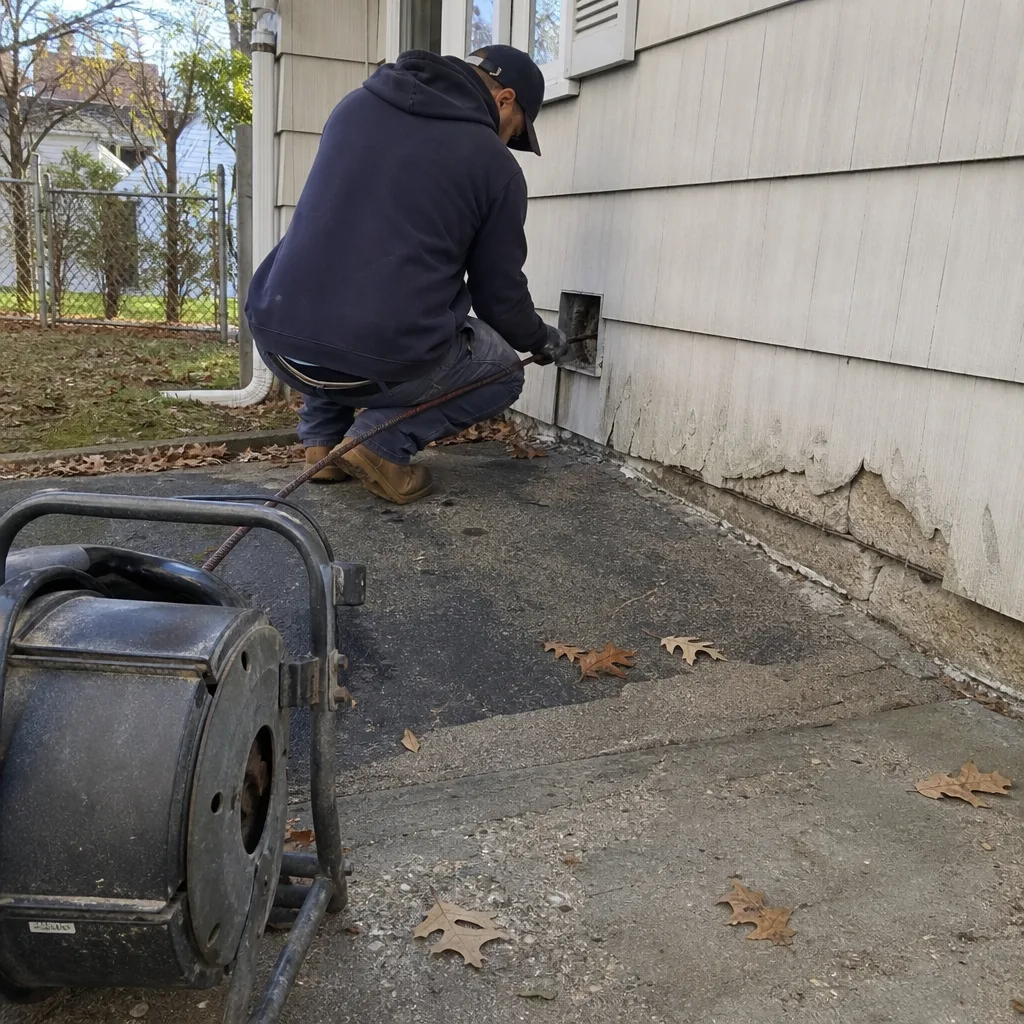 Before
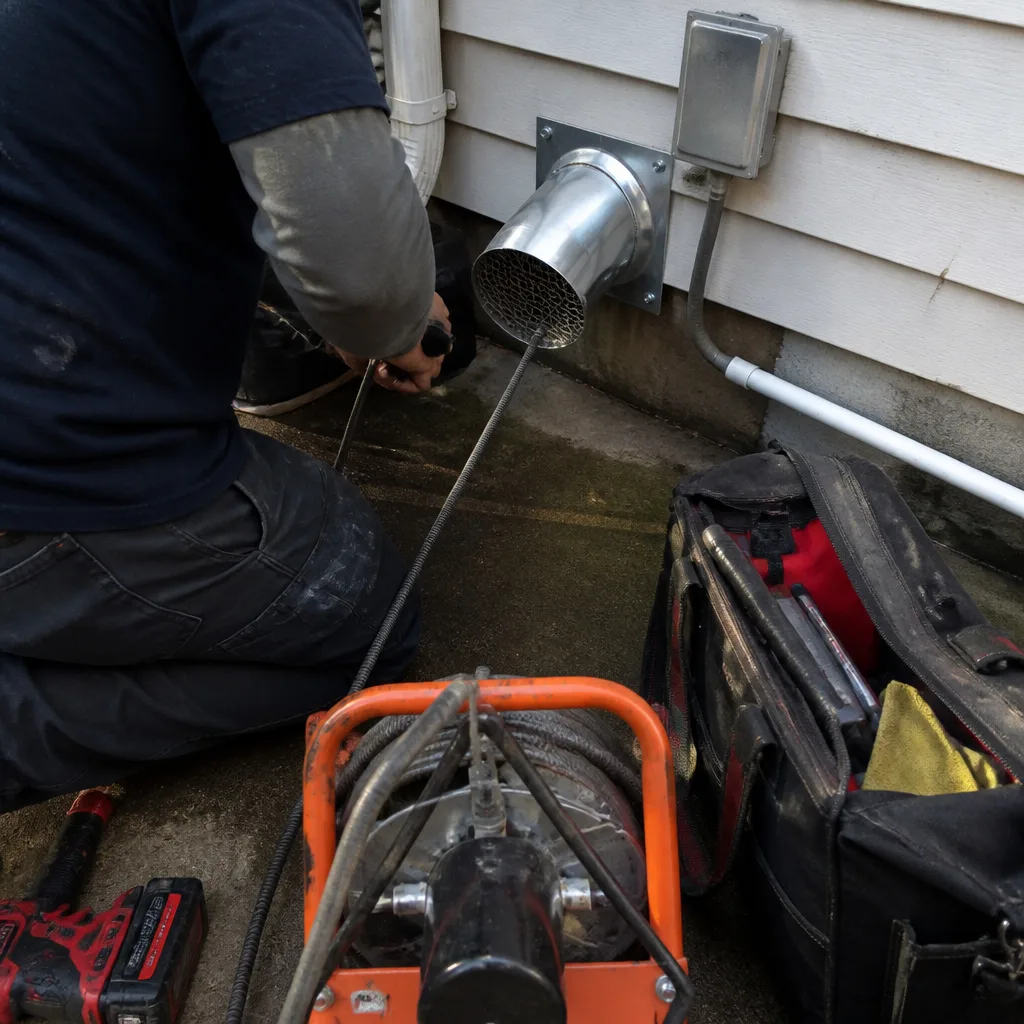 After
After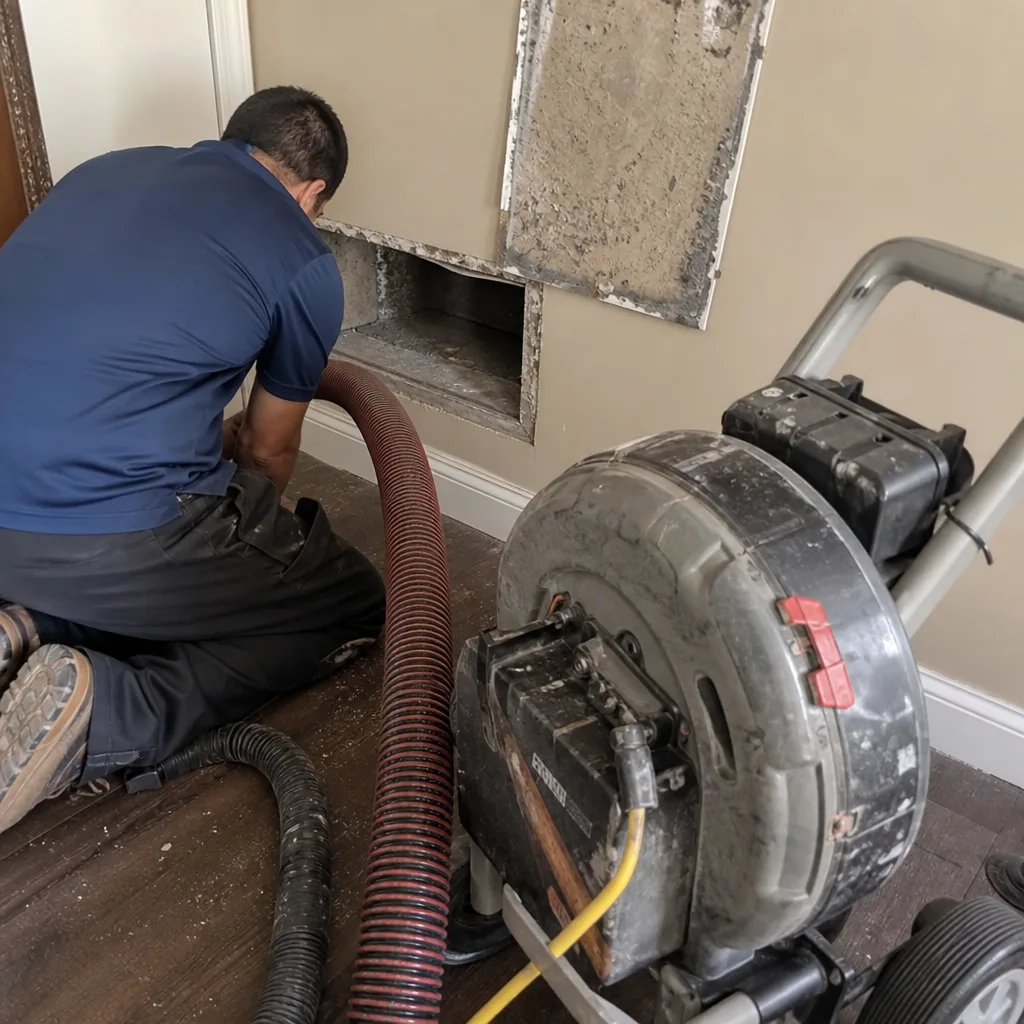 Before
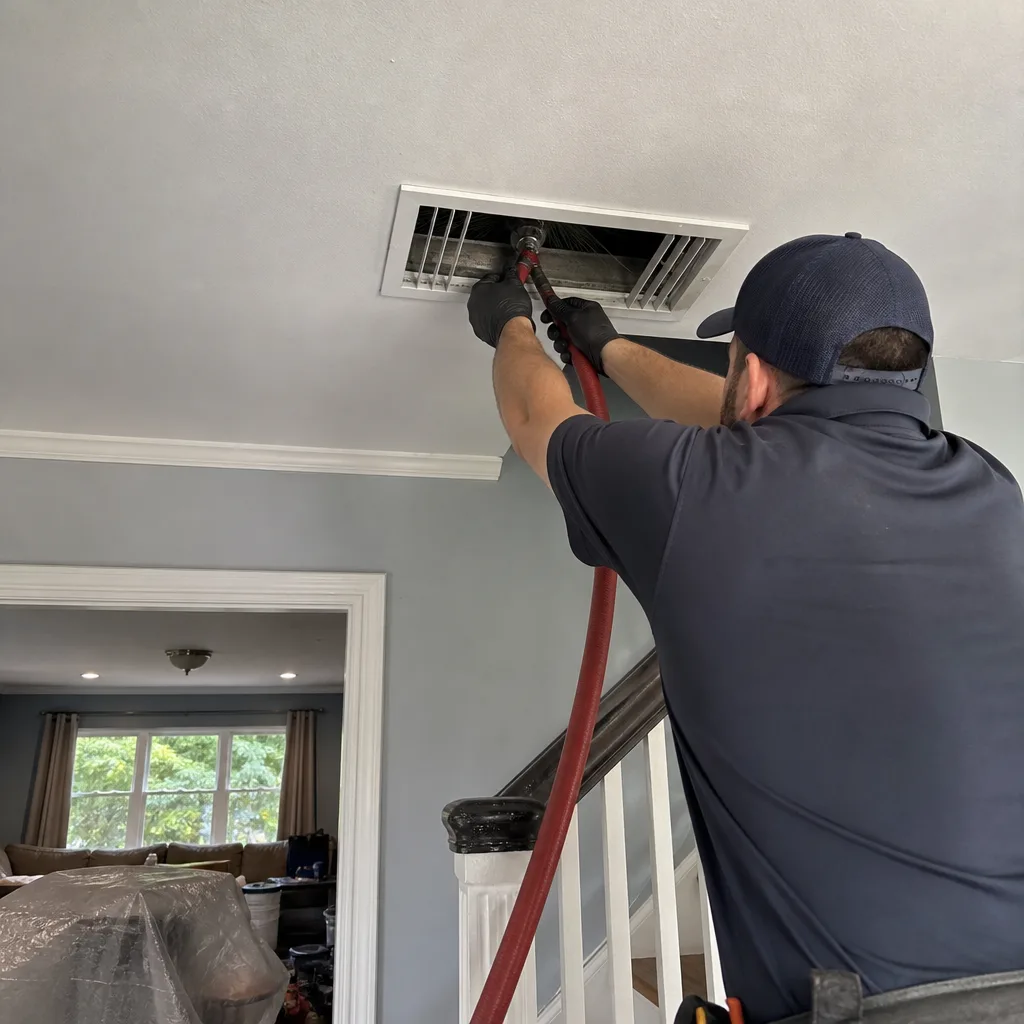 After
After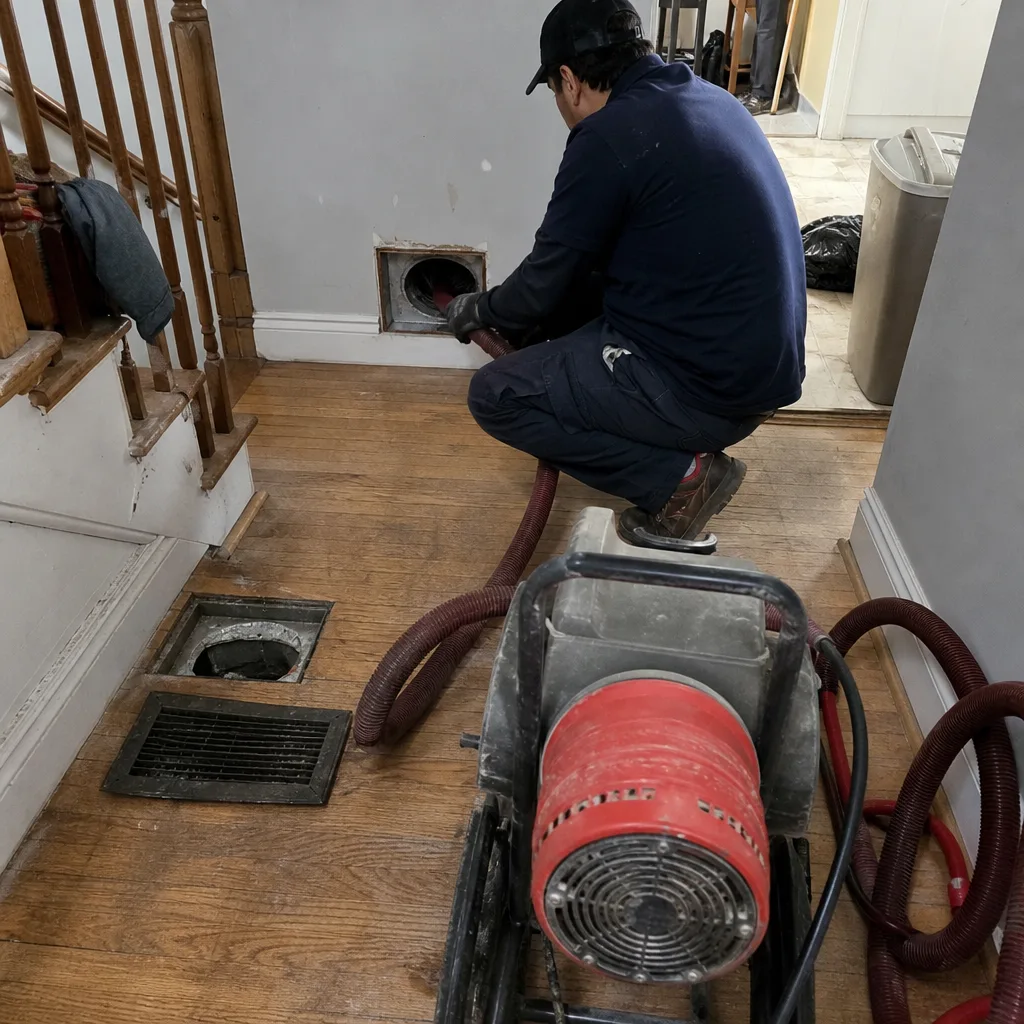 Before
 After
AfterWhy Hempstead’s Climate Makes Four Distinct Seasons of Duct Stress
Most duct cleaning guides are written as if every home in the country has the same problem. Hempstead doesn’t work like a home in Phoenix or Minneapolis. You get all four seasons in a form that taxes a duct system in sequence. Summer humidity drives the coil contamination cycle. Fall temperature swings drive the drying and release cycle. Winter heating demands drive the filter loading and static pressure cycle. Spring, especially a wet spring like the ones Nassau County has had in recent years, drives the rehydration and growth cycle. A single annual cleaning reminder ignores the way contamination actually builds, which is in phases, with each season feeding the next.
That sequence is why timing matters. Clean the ducts in April after the pollen but before the humidity, and you address the previous winter’s accumulation but you leave the coil fully exposed to the summer contamination cycle that is about to begin. Clean in October after the summer coil contamination is done and before the heating system blows it all through the house, and you interrupt the cycle at its highest-risk point. That’s the timing logic in one paragraph, and it’s the answer to the question people actually ask when they call: “Is it better to clean in spring or fall?” The correct answer for Hempstead is fall, with a spring inspection as the check to confirm the fall cleaning held.
The equipment a Hempstead contractor uses matters more than it would in a mild climate, because the contamination here is biological as often as it’s particulate. A rotary brush system like the Rotobrush units our crews run does the mechanical work of breaking debris off duct walls. The negative-air setup is what removes that debris from the house so it doesn’t become airborne dust in the living room. And for homes where the cleaning reveals persistent moisture or leak problems, the fix is duct sealing, not just more frequent cleaning. Sealing is the intervention that breaks the seasonal cycle at the source, by keeping outside air, humidity, and contamination out of the duct system entirely.
What a Proper Seasonal Duct Cleaning Actually Costs in Hempstead
You should know the real numbers before you call anyone. For a typical single-family home in Hempstead, roughly 1,500 to 2,500 square feet with a single furnace or air handler, a whole-home duct cleaning runs between $350 and $650. That’s the honest range for a crew doing the work properly with negative-air equipment, not a blow-and-go outfit that shows up with a shop vacuum and a coupon. Homes with two systems, long duct runs, or significant biological contamination can push toward the top of that range or slightly above. Dryer vent cleaning as an add-on typically runs $100 to $200, and if you have a gas dryer, we consider it a safety service, not an upsell. The dryer vent cleaning service in Hempstead we provide includes the same written pricing and the same 365-Day Done Right Promise as the duct cleaning.
What you should not accept is a per-vent price. That’s the old bait-and-switch structure, where a $49 teaser covers “up to 8 vents” and the real invoice arrives once the technician is inside and counting. Every job we quote has one written price per system, agreed to before work starts, and it does not move at the door. That’s not a policy. That’s the only way the math works in a trade where the homeowner can’t see inside the ducts and has to trust that the work claimed was actually done. Before-and-after photos of your own ducts are part of every job, and you’ll see the same register openings you walk past every day, not stock photos.
One more cost note that matters for Hempstead specifically: if your home is older and has never had the ducts sealed, budget for sealing as a separate line item, not a surprise. Duct sealing typically runs $800 to $1,500 for a single system, depending on access and how many leaks exist. It’s not required on every home, but in the older housing stock west of the Turnpike and around the Hofstra area, it’s common enough that we flag it during inspection rather than after a cleaning. Sealing is what makes your seasonal cleanings last longer and your energy bills behave more predictably through Hempstead’s four-season swings.
Common Mistakes to Avoid
- Scheduling duct cleaning for spring because the AC smells. By then, the contamination has been in the system for months. Fall is the defensible timing; spring is when you pay to fix what fall cleaning would have prevented.
- Assuming a visible filter means the ducts are fine. The filter catches what’s heading into the blower. What’s upstream of the filter, in the return ducts, is not being caught by anything, and in a Hempstead summer, that upstream return can be the wettest, most contaminated part of the whole system.
- Replacing a 1-inch filter with a high-MERV filter to “clean the air better” without checking static pressure. In a system that was designed for low resistance, a MERV 13 filter can reduce airflow enough to shorten blower life and push the coil out of its efficient range, which causes exactly the coil contamination you were trying to prevent.
- Ignoring the dryer vent because the dryer “still works.” A slowly loading dryer vent doesn’t stop working until it becomes a fire hazard. In Hempstead, where many laundry rooms share walls with finished basements, the vent run is often long and full of turns, and a partially blocked vent means longer dry times and more lint accumulation upstream where you can’t see it.
- Getting one quote and trying to compare it to a national average from a blog. Hempstead homes, even in the same neighborhood, have wildly different duct configurations depending on age, fuel source, and whether the basement is finished. A $399 average from an article written in Ohio doesn’t tell you anything about your house.
- Treating duct cleaning as a one-time fix. Hempstead’s climate means the contamination cycle repeats every year. The cleaning resets the baseline, but the baseline starts building again the day after the crew leaves. That’s what the 12-month log is for.
- Hiring on price before checking what “cleaning” includes. A $249 duct cleaning that doesn’t use negative-air equipment is not a cheaper version of the same service. It’s a different service with the same name, and in a humid climate, the debris it leaves in the house is the whole reason you called.
When to Call a Professional
You should call for a professional inspection when you see or smell things you can’t explain: a musty odor that persists after filter changes, visible debris at multiple registers, rooms that never reach the same temperature as the rest of the house in peak season, or any sign of moisture in or around the mechanicals. You should also call before you buy a home in Hempstead, because a duct inspection is one of the few checks a standard home inspection doesn’t include, and the previous owner’s duct history is almost never disclosed. And if you’ve kept the 12-month log and it shows a clear seasonal pattern, meaning the same smell, the same dusty registers, the same stuffy room at the same time every year, that’s a signal the system needs an intervention beyond cleaning, usually sealing. Hollis Air Duct Hempstead offers free estimates in Hempstead, call (516) 559-4917. We’ll give you a written diagnosis and a flat price before any work starts, and you can keep the diagnosis whether or not you hire us.
Frequently Asked Questions
Every 3 to 5 years for most Hempstead homes, with annual inspection. The interval is driven by filter habits, pets, and whether the home has had renovation work, not by a calendar. Homes with allergy sufferers or multiple pets often benefit from a 2 to 3 year interval, and homes with new construction dust or a single renovation commonly need one cleaning immediately after the work is done. Call (516) 559-4917 and we’ll give you an honest read on whether your ducts are due.
Because some companies quote a per-vent teaser price and count on the total being much higher once the technician arrives, while others quote a flat whole-system price that covers the entire job. The cheap quotes are usually for a brush-only or vacuum-only service with no negative-air equipment, which leaves loosened debris in the house. A legitimate whole-home cleaning in Hempstead runs $350 to $650, and if a quote is far below that, it’s not the same service.
Ask for before-and-after photos of your own registers and duct interiors before you hire anyone. A legitimate company will provide them voluntarily. If a company can’t show you photos of their own work in your own home, you have no way to verify anything was cleaned at all. Every Hollis job includes photo documentation as part of the written report. Call (516) 559-4917 to get a team that shows its work.
Yes. If any part of the cleaning or sealing work fails within a full year, we return and make it right at no charge, including a free second visit. That is written on every invoice. In a trade where most companies’ guarantees end when the van leaves the driveway, that’s the commitment, and it’s the reason we’re willing to put it in writing on every job.
After. Always after. Drywall dust, demolition debris, and construction particulate will be pulled into the return ducts during the work, and cleaning before a renovation means paying to bring the system to a baseline that gets destroyed within days. Clean after the work is done and the dust has settled, and if the renovation involved any demolition in the basement or near the mechanical room, expect that the cleaning may need to be paired with an inspection of the return side for debris drawn into the blower cabinet.
That depends on what’s actually in the ducts. The justification for seasonal cleaning is not just allergy relief. It’s also protecting the equipment. Contamination on the coil reduces efficiency and shortens equipment life, and debris in the ducts contributes to the filter loading and static pressure issues that make a blower motor work harder than it should. In Hempstead summers, a dirty coil costs you money whether or not anyone in the house sneezes. Call (516) 559-4917 for a free estimate and we’ll tell you what’s actually in there.
The Bottom Line
Hempstead’s climate gives your duct system four distinct stress periods each year, and the maintenance that matters in November is not the maintenance that matters in April. Fall is the pivotal season, because the transition from AC to heat releases a summer’s worth of coil contamination through the system at once. Winter is for monitoring filter loading and room-to-room output differences. Spring is for the post-heating assessment that catches what a winter of combustion residue left behind. Summer is for watching the coil, the single most contamination-prone component in your home. Keep the 12-month log, time your cleanings to the fall transition, and you’ll spend less on maintenance over the life of your system while breathing air that doesn’t carry last season’s problems.
We’re a phone call away when you’re ready. Call (516) 559-4917 for a free estimate, and we’ll give you a written price before any work begins.
Written by Roy Castellanos, Owner at Hollis Air Duct Hempstead, serving Hempstead since 2004.